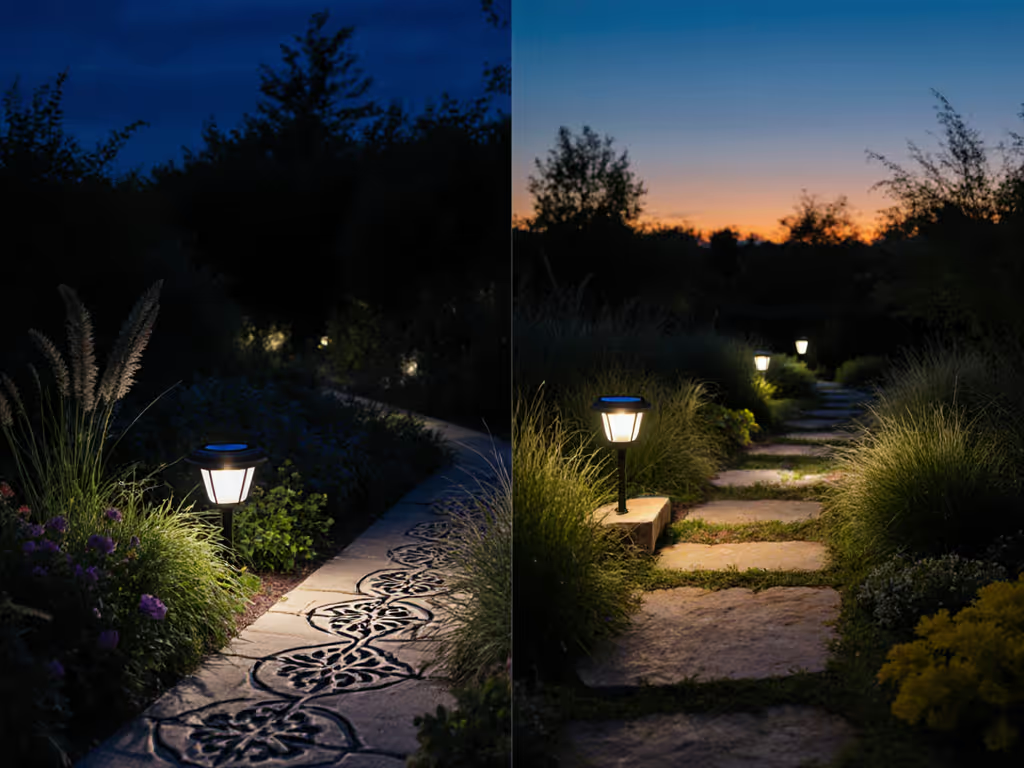
Spectral Impact of Solar Garden Light on Pollinator Behavior
By Hana Takahashi • 2nd Jun
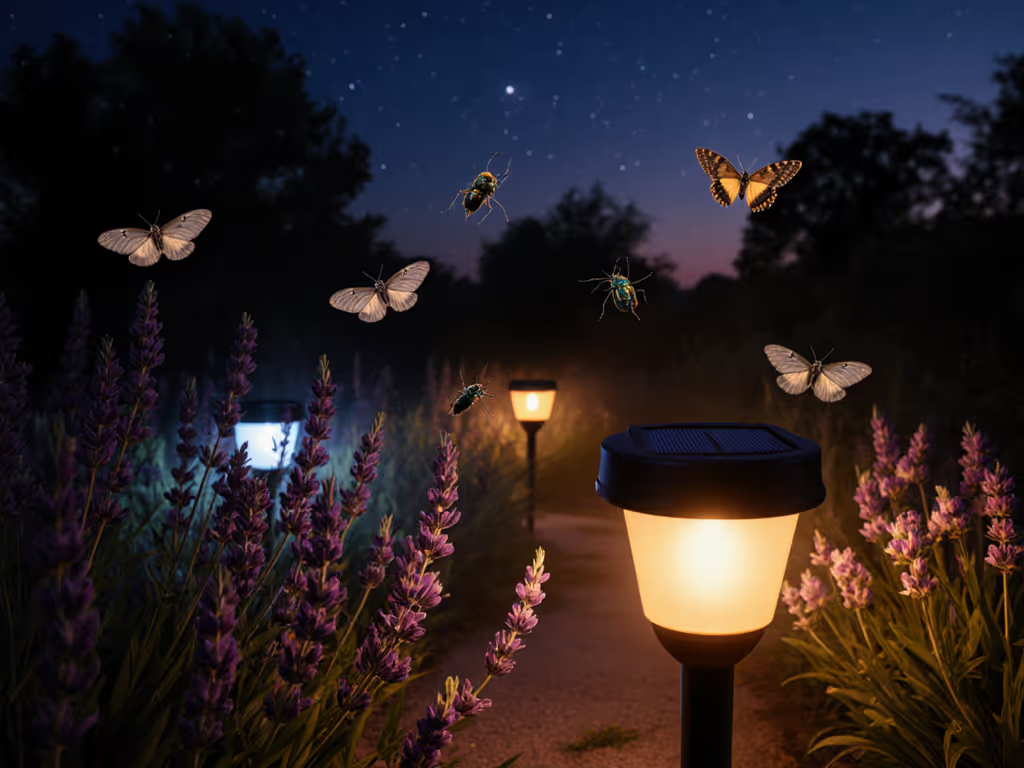
Solar light spectral impact is not just an engineering question; it is central to how your lighting choices will support or disrupt pollinator behavior and the life in your garden at night. This FAQ-style deep dive looks at what current research shows, and how to translate that science into practical, wildlife-friendly solar lighting.
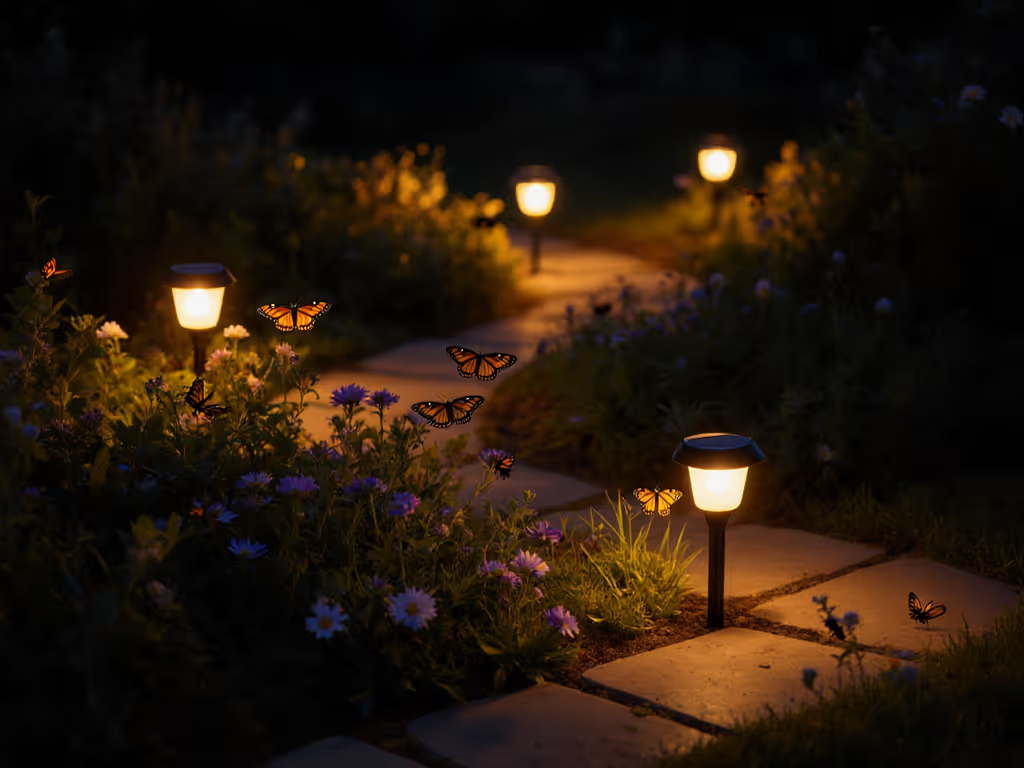
What does "spectrum" mean in solar garden lights, and why should pollinator-friendly gardeners care?
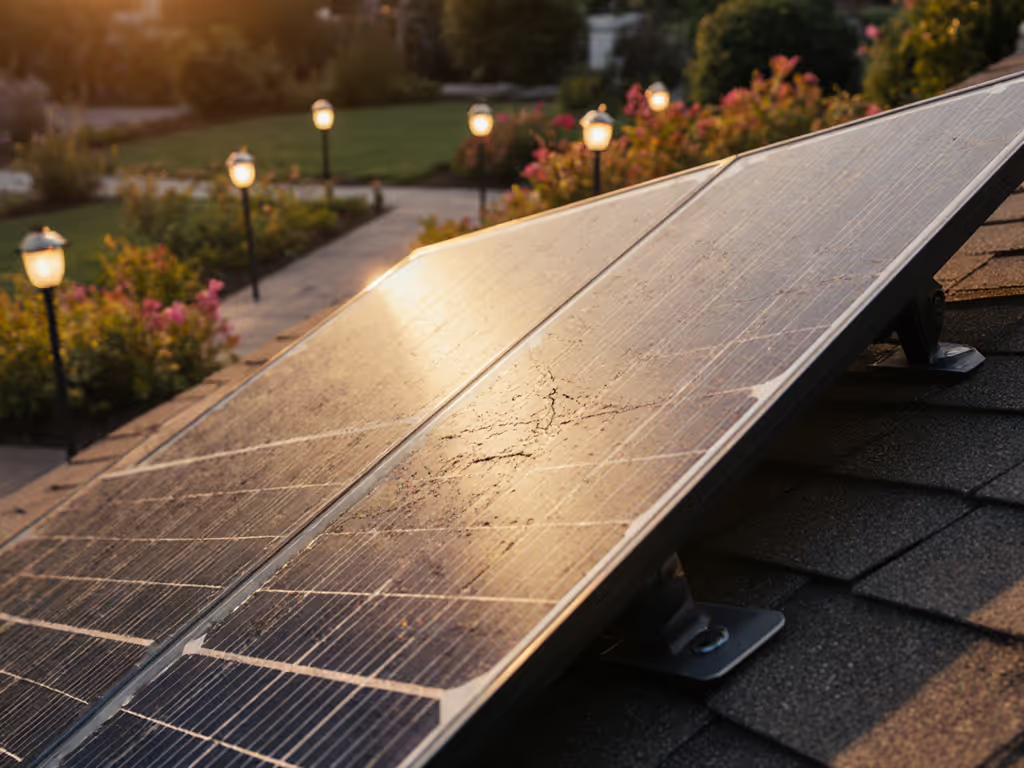
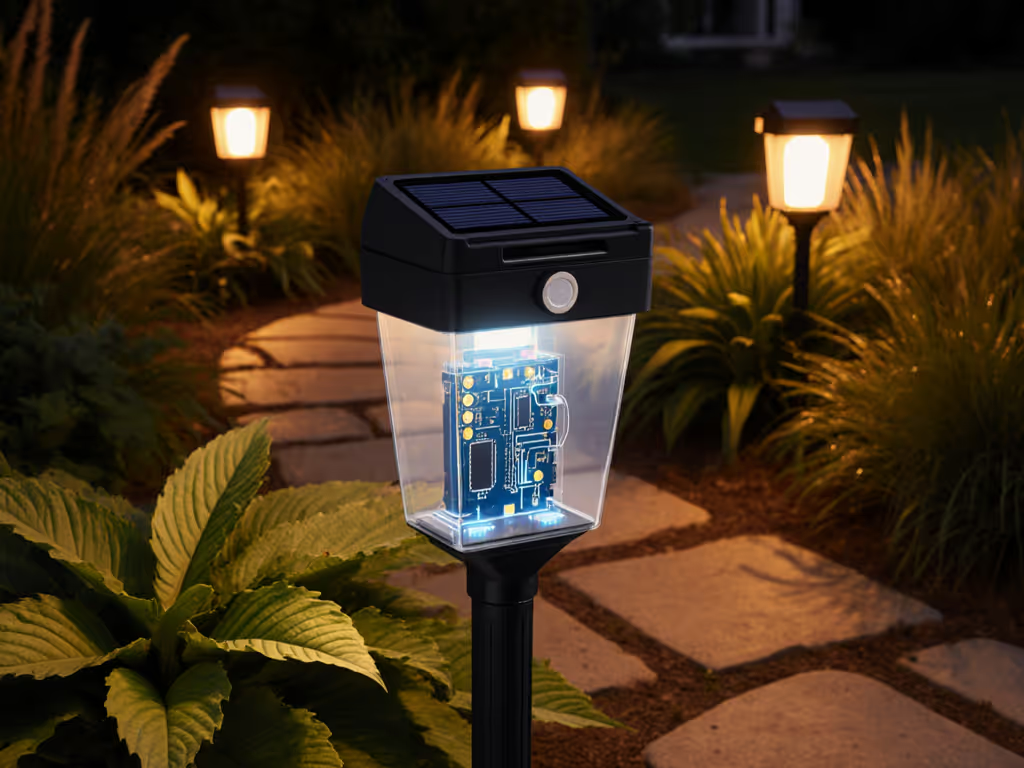
Most outdoor solar lights share the same basic architecture: a small photovoltaic panel, a rechargeable battery, an electronic controller, and one or more LEDs that turn on at dusk.[8][6] The spectrum is the mix of wavelengths those LEDs emit (usually represented as a curve showing how much energy is emitted at each wavelength from roughly 400-700 nm, violet to red). To understand how color temperature choices influence plants and overall ecosystem health, see our plant-friendly Kelvin guide.
Key points for gardeners:
- Solar lights are almost always LED-based, so their spectral profile is determined by the LED design, not the panel or battery.[7][10]
- Many "cool white" LEDs have a strong blue peak around 450-470 nm, created by a blue LED plus phosphor.[15]
- "Warm white" LEDs shift more power toward yellow to red wavelengths, reducing the blue component even if the brightness (lumens) stays similar.[15]
Nocturnal insects, including many moths and some beetles, are highly sensitive to shorter wavelengths (UV-blue-green), which they use for orientation and navigation.[13] When garden lights emit a lot of energy in those bands, they can attract and trap insects around the source, altering local insect navigation patterns and removing pollinators from flowers they would otherwise visit.[13]
Shield the source, save the stars: the more you control what wavelengths escape into the night sky and across your garden, the less you disrupt wildlife.
Which parts of the spectrum most strongly affect moth attraction and other nocturnal pollinators?
Studies synthesizing wildlife responses to artificial light at night consistently identify short-wavelength light (UV, blue, some green) as the most disruptive across many taxa.[13] For insects, this often appears as strong attraction and circling behavior around the light source - the classic "moths to a flame" response.
From the available research:
- A PLOS One evaluation of different artificial lighting spectra for environmental impact found that blue-rich white light tends to have greater ecological effects than longer-wavelength alternatives, specifically highlighting insects among the sensitive groups.[13]
- Experimental work with solar powered LED illumination on ground-dwelling arthropods (beetles and others) showed that even dim, solar-powered LEDs changed arthropod activity, with some species attracted and others avoiding the lit area.[3]
Although the solar study focused on epigeal (ground-dwelling) arthropods rather than flying moths, it reinforces a general lesson: low-intensity garden lighting is still biologically visible, and spectral content shapes whether species are drawn in or displaced.[3]
In practical terms for moth attraction spectra:
- Light with strong UV/blue components (common in cool-white LEDs) tends to attract more insects.
- Light shifted toward amber and red tends to attract fewer insects and is often recommended for wildlife-sensitive sites.[13]
This is why spectrum choice matters as much as brightness. A dim, blue-rich light can be more ecologically disruptive than a slightly brighter, amber one.
Do warm-white or amber solar lights make a difference for bee-friendly lighting and night pollinators?
Day-active pollinators such as honeybees and many solitary bees rarely forage in darkness, so most bee-friendly lighting guidance focuses on avoiding early-morning or late-evening disruption and protecting resting sites. By contrast, many moths and some beetles are active throughout the night, and they are important pollinators for night-blooming plants.
Evidence and inference together suggest the following:
- Warm-white and amber LEDs reduce the proportion of short-wavelength emission compared with cool-white LEDs, even at the same nominal brightness.[15]
- Based on spectral impact assessments, amber-shifted spectra are consistently ranked as less disruptive to insects than blue-rich white light.[13]
So for pollinator behavior lighting that is safer for night-active pollinators:
- Prefer <= 3000 K warm-white or, ideally, amber solar lights.
- Avoid cool-white or "daylight" products that emphasize a crisp, bluish appearance; these typically concentrate emission where insect sensitivity is high.[13]
From a practical garden standpoint, warm/amber light also gives a softer visual effect that aligns with dark-sky guidance and creates a calmer night garden, rather than a bright, commercial look.
What does research say specifically about solar-powered LEDs and ground-dwelling insects?
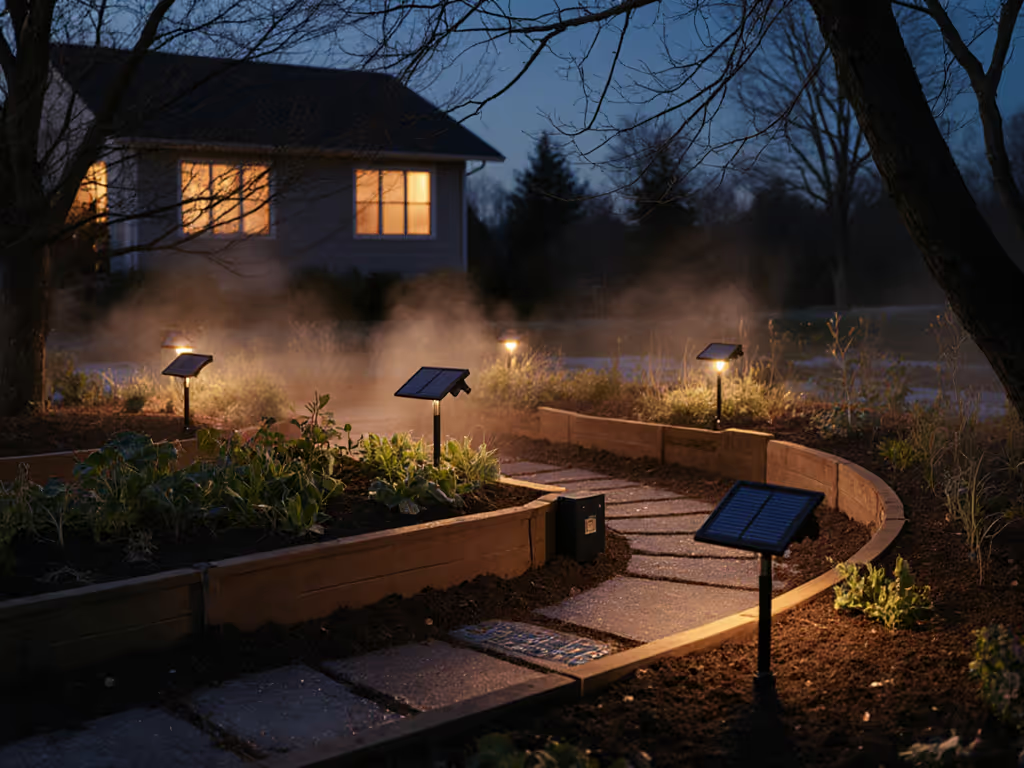
A field study on solar powered LED illumination and epigeal arthropods examined how low-intensity solar LED lighting affected ground-dwelling beetles and other arthropods in a temperate habitat.[3]
Key findings:
- Arthropods did not respond uniformly; even within the same beetle family, some species were attracted, others were repelled, and some showed reduced activity under the lit conditions.[3]
- The LEDs used were relatively dim compared with many commercial garden lights, yet changes in species composition and behavior were still detectable.[3]
The study demonstrates two important principles for the home garden:
- "Low brightness" is not the same as "no impact." Even modest solar lights can alter invertebrate communities.
- Species-specific responses mean there is no single, harmless spectrum for all insects. The aim is to reduce overall disruption and avoid the most attracting wavelengths, rather than to find a mythical zero-impact light.
These results complement broader spectral assessments, which suggest that shifting light away from short wavelengths and limiting its spread in space and time are robust mitigation strategies.[13]
Does color temperature (Kelvin) fully describe the ecological impact of a solar light's spectrum?
No. Color temperature (CCT) is an approximate descriptor of a light's appearance (warm vs cool) and does not uniquely determine its detailed spectral power distribution.
Research on LED spectra for plant growth illustrates why this matters: LEDs with the same nominal CCT can have very different balances of blue, green, and red light, and those differences produce different biological responses in plants.[15] The same principle applies to insects and other wildlife: their sensory systems respond to actual wavelength-specific photon flux, not to the marketing number on a box.
In a PLOS One analysis of artificial lighting for ecological impact, the authors explicitly argue that assessing and managing spectral content is more informative than relying on broad categories like "warm white" or "cool white" alone.[13]
Implications for gardeners:
- Treat CCT as a first filter (e.g., do not consider >3000 K for wildlife-sensitive areas).
- Where possible, look for products that specify a spectral distribution or clearly identify "amber" or "PC-amber" LEDs rather than generic "soft white."
- When spectra are unknown, combining warm CCT with strong shielding and limited operating hours is a pragmatic, lower-risk strategy.
How can I design pollinator-friendly solar lighting in my garden based on current science?
Drawing together results on solar light spectral impact, insect attraction, and dark-sky principles, a pollinator-aware design usually follows a simple pattern: Warm, shielded, and timed: light that wildlife can live with.
1. Minimize blue-rich light
- Choose solar lights advertised as 2700-3000 K warm white or amber rather than "daylight" or "cool white."[13]
- Avoid products that highlight a "crisp" or "bluish" tone; these typically contain a strong short-wavelength peak.
2. Shield the source
- Prefer fixtures where the LED is recessed or hooded so you see illuminated ground or foliage, not the bare diode.
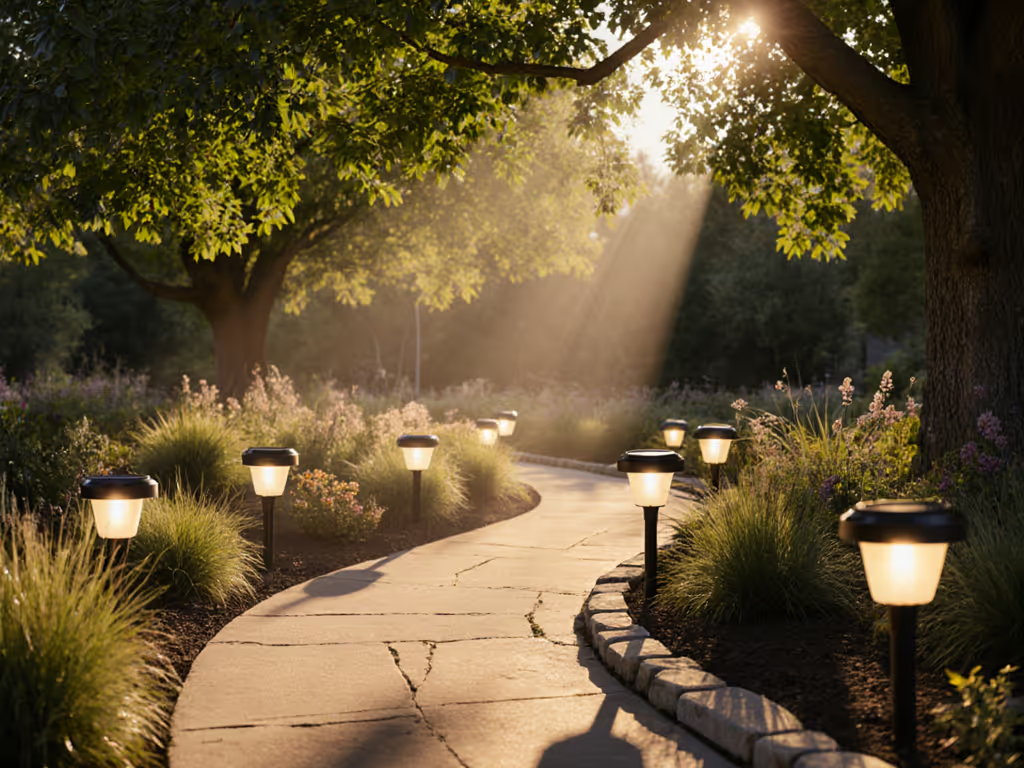
- Use path lights with opaque tops and side louvers rather than clear, globe-style heads. This reduces skyglow and direct lines of sight for insects flying higher over the garden.[13]
- Keep mounting heights low and aim beams downward and narrowly, rather than flooding entire beds.
Warm, shielded, and timed: light that wildlife can live with.
3. Control duration and timing
Field evidence shows that even dim solar LED lighting can affect arthropods, so limiting the time window of operation is as important as spectrum.[3]
Practical options:
- Use fixtures with an auto-off after several hours instead of dusk-to-dawn operation.
- In gathering areas, install motion-activated solar lights rather than continuously glowing ones.
- If you host many night-blooming plants, consider letting the garden go completely dark through the middle of the night, when many nocturnal pollinators are actively foraging.
4. Place lights away from key pollinator resources
- Keep solar lights at the edge of beds or along paths, not directly among flowers and seed heads.
- Avoid spotlighting nectar-rich plants that bloom at night; this can create traps where insects are drawn to the light rather than moving naturally between flowers.
- Use brighter, more functional lighting near entrances, steps, or driveways, but keep pollinator corridors (hedges, dense beds, water features) as dark as safety allows.
5. Use only as much brightness as you need
Guides for outdoor lighting suggest that 50-100 lumens is sufficient for most paths and garden edges, with higher outputs reserved for task or security lighting.[6][5] For help decoding lumens, color temperature, and beam angle into real visibility, read our Lumens vs Watts guide. Staying at the lower end for decorative and wayfinding applications reduces attraction radius and energy use.
Because most solar lights already operate at modest outputs, the main risk is not over-lighting one point, but installing too many fixtures. A few carefully placed, warm, shielded lights often serve both safety and aesthetic goals better than a continuous line of bright stakes.
If I already own cool-white solar lights, what simple changes can reduce their impact on pollinators?
You may not need to replace everything immediately. Several low-effort adjustments can substantially reduce ecological impact while you plan longer-term changes.
- Reduce the number of active lights.
- Remove or switch off every other fixture along a path.
- Prioritize lighting for clear safety needs (steps, elevation changes) and let purely decorative zones go dark.
- Improve shielding and direction.
- Add simple top shades or collars (even non-reflective metal or opaque garden accessories) to block upward and sideways spill, forcing light downward.
- Reposition fixtures so they illuminate paths from the side, not directly over plantings.
- Limit operation time.
- Cover the panel part-time or use the built-in switches so lights run only on evenings when you are outdoors.
- Where possible, choose shorter-runtime modes instead of dusk-to-dawn.
- Plan gradual replacement toward warm/amber, shielded models.
- As units fail or need upgrading, use the principles above (warm spectrum, strong shielding, modest output, and smart timing) so the overall pollinator garden lighting science of your space improves over time.
In field monitoring, I have watched moths cluster around a cool-white, unshielded path light while largely ignoring a nearby warm, shielded fixture of similar brightness. The difference in behavior was immediate and visible, both in the air and in the number of insects available to visit nearby flowers. Experiences like this echo the literature: spectrum and shielding together strongly shape how much your garden lighting interferes with the night's quiet work.
For further exploration, consider observing your own garden: spend a few quiet minutes on a still night noting where insects congregate, which lights draw the most activity, and how behavior changes when you temporarily switch certain fixtures off. Then use our science-backed testing guide to structure simple night-by-night observations and compare results in your own garden. Those observations, paired with the research summarized here, can guide iterative, site-specific adjustments, step by step moving your garden toward solar lighting that keeps paths safe while letting pollinators and stars remain, as much as possible, undisturbed.
Related Articles