Decorative vs Functional Solar Lights: Real Performance
By Aisha Nwosu • 24th Apr
When I bought that 12-pack of solar stakes on clearance years ago, I thought I'd solved the pathway lighting puzzle on the cheap. By October, eight had dimmed to useless. By spring, plastic had yellowed. I ran the math on replacement cycles across three winters and learned an expensive lesson: the cheapest light is the one you don't replace.
Today, homeowners face the same fork: decorative solar lights that look pretty but fade fast, or functional ones engineered for year-round duty. If you're new to solar lighting, start with our first-time buyer features that actually last for a clear checklist of durable specs. The difference isn't just aesthetic (it is financial, practical, and baked into materials, batteries, and optics). Decorative vs functional solar lights diverge fundamentally in design intent, and conflating them is how most people end up with underwhelming yards and drawer-fulls of dead units.
What Decorative Solar Lights Actually Are
Decorative solar lights prioritize form over longevity. They're designed to be noticed, to add visual whimsy (color, shape, novelty), often with modest light output (2-15 lumens). A glowing orb. A lantern. A stake shaped like a flame. The aesthetic is the product.
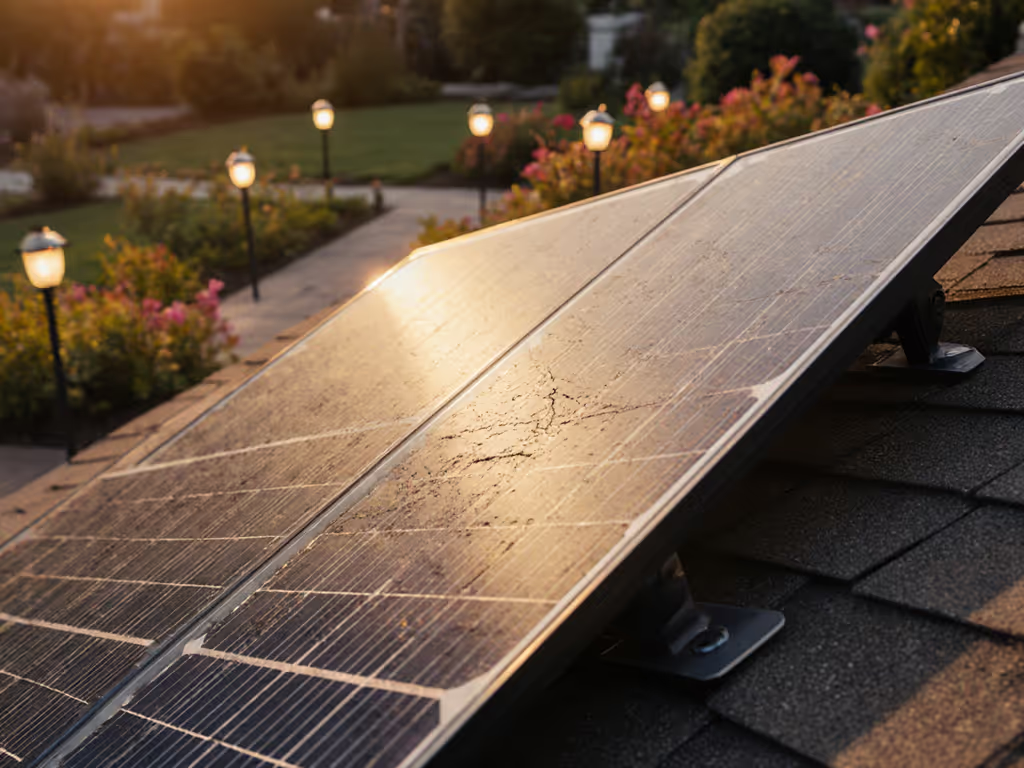
The trade-off is brutal: thinner plastic housings, cheaper LED drivers, smaller solar panels, and tiny batteries optimized for 3-6 month lifespans. In variable-weather climates (the Pacific Northwest, Northeast, Upper Midwest), this means they're largely spring-through-fall props. Winter sun angle drops, clouds thicken, panel efficiency plummets, and those tiny batteries can't hold charge in cold.
Most decorative lines don't disclose true panel wattage, battery chemistry, or IP ratings. They lead with lumens (often inflated) and aesthetics. Warranty honesty is rare. This is by design: if you replace them annually, inventory turns. The business model depends on disposability.
What Functional Solar Lights Are Built To Do
Functional solar lights are engineered for duty. They prioritize safety lighting requirements: consistent illumination across seasons, reliable dusk-to-dawn operation even after cloudy stretches, durable construction in freeze-thaw cycles. Think pathway stakes with 20-60 lumens, deck step lights, or perimeter markers rated IP65 or higher.
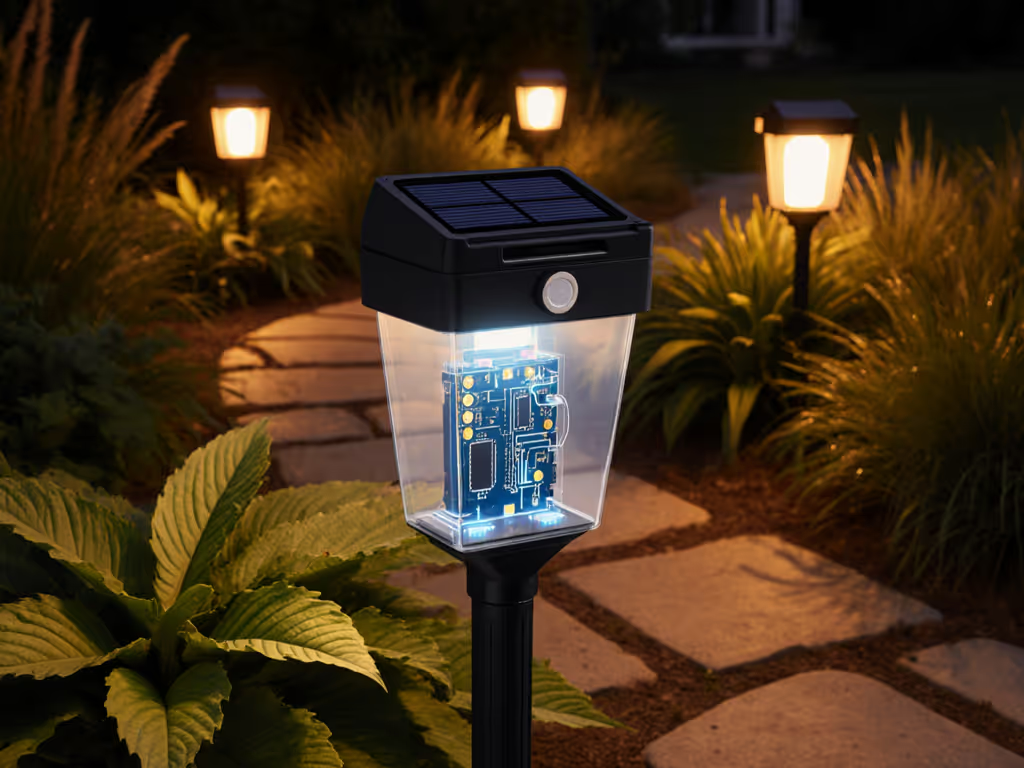
Functional units specify panel wattage (0.5-1.5 W per light), battery type (NiMH, lithium), capacity (mAh), and light color temperature (often 2700-3000 K for warm, neighbor-friendly glow). They're built thicker, with powder-coated aluminum, UV-resistant lenses, and stainless fasteners. They assume water intrusion and account for it. They last 3-5 years with minimal maintenance, not 5 months.
The upfront cost is higher. A single quality functional stake costs what three cheap decorative ones do. But here's the real number: spread that cost across seasons, and the math flips sharply.
Performance Metrics That Actually Matter
Too many solar light specs are theater. Marketed lumens (see our lumens vs watts guide) ignore beam spread, color temperature, or how far light actually travels. Here's what moves the needle:
True Lumen Output & Beam Spread: A 50-lumen light with a 60° beam spreads differently than one with a 120° pattern. For pathways, you want controlled spread (tight beam, no glare). For accent lighting, wider is softer. Verify lumen claims with independent test logs if possible, not manufacturer PDFs.
Battery Chemistry & Capacity: NiMH cells are reliable but fade faster in cold. Lithium retains charge longer in freezing temps but costs more upfront. Capacity (mAh) directly predicts run time. A 1000 mAh battery won't push 60 lumens through a 12-hour winter night. Simple arithmetic: lumens x hours = mAh needed, with 20% buffer for efficiency loss.
Panel Wattage & Angle: A 0.2 W panel on a vertical stake underperforms in winter (low sun angle). Higher wattage (0.5-1.0 W) or a tiltable panel charges faster. Seasonal sun variance is enormous; account for it.
IP Rating & Material: IP65 means dust-tight and water-jet proof. IP67 handles submersion briefly. Below IP64, water creeps into optics and corrodes electronics. Plastic fogs or yellows; aluminum holds. Ambiance-lighting metrics can be marketing fluff, but durability ratings are honest, and they predict landfill dates.
Ambiance vs Safety: Different Goals, Different Tools
This divide maps neatly onto use case.
Decorative lights excel at accent and mood: highlighting a planting bed, marking a tree ring, creating visual interest. They're not meant to illuminate a path safely. Their glow is intentional jewelry. IP ratings and cold tolerance don't matter if failure is expected within a season.
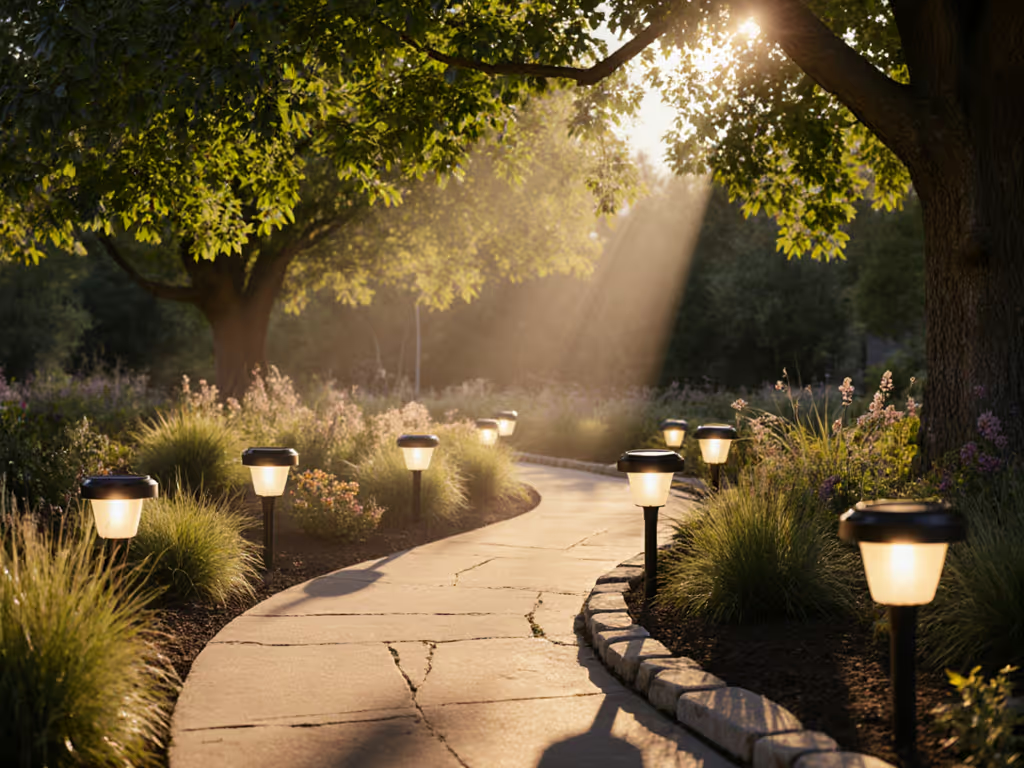
Functional lights handle pathway safety standards and safety illumination thresholds. Standard practice: 0.5-1 foot-candle of light (roughly 5-10 lumens per meter of path) for safe foot traffic without glare. Step lights need clear visibility to prevent tripping. These aren't subjective; they're informed by accessibility and liability guidance.
Warm color temperature (2700-3000 K or amber) protects night vision and respects dark-sky principles. For product picks that minimize skyglow, explore our Dark Sky certified solar lights comparison. Cool white (5000 K+) is harsher, invites insects, and reads as institutional, which is wrong for a home garden meant to feel like sanctuary, not parking lot.
Real-World Durability: Seasons and Shade
Theory breaks fast against winter and shade.
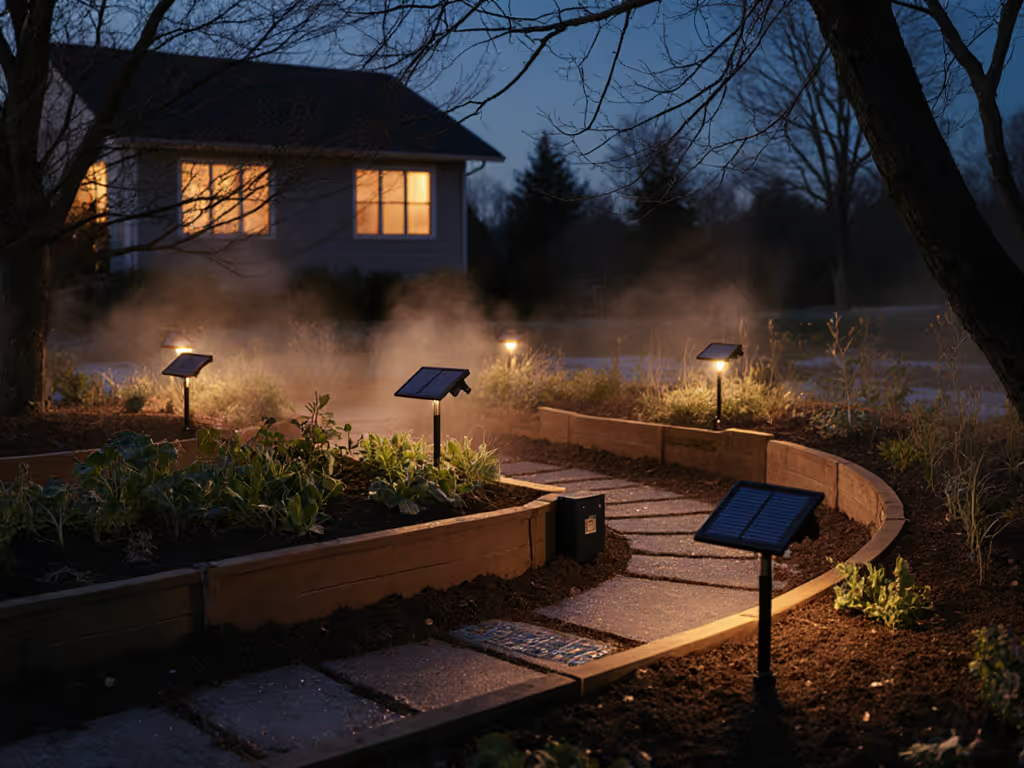
In snowbelt climates, solar lights face three enemies: low winter sun angle (45° in December vs. 60° in September), short days (9 hours), and cold battery performance (50% capacity loss near freezing). A light rated for 12-hour run time in July might manage 4 hours in January. Most budget units simply don't wake up on consecutive cloudy days; batteries drain faster than panels can recharge.
Shaded sites (under trees, north-facing paths, fence lines) cut solar input by 40-80%. If your garden fights shade, see our best solar lights for shady gardens that actually work for models proven to charge in low light. Cheap decorative lights vanish. Functional units with higher-efficiency panels or tiltable remote sensors work, but require intentional placement or extra spend. Few budget lines bother with shaded-site engineering.
Water intrusion kills lights faster than cold. Freeze-thaw cycles crack cheap plastic seals. Ice melt and road salt corrode unprotected metal. IP rating matters only if you buy it, and most sub-$10 units skip it entirely.
The Math: Measuring Glow Per Dollar
Here's where skepticism pays. Buy fewer, brighter longer, and measure glow per dollar, not hype.
A decorative 10-lumen stake at $8, dead by November, costs roughly $8 per season of use (about $40 across five winters if you replace it annually). Five units to cover one pathway.
A functional 40-lumen stake at $25, lasting four winters, costs $6.25 per season, and one unit lights the same path reliably. Over five years: $8 x 5 = $40 (five dead units) vs. $25 + replacement battery ($8) = $33. The functional choice saves money and reduces landfill load.
Inventory it across a whole yard (10-15 lights), and the gap widens. Functional approach: 5-8 quality units, lower replacement churn, predictable refresh cycles. Cheap approach: 15-20 units cycling constantly, inconsistent coverage, storage drawers full of non-functional stakes.
This is lifecycle cost thinking, not sale-price thinking.
When to Choose Each
Choose decorative lights if:
- You're accenting a single feature (topiary, rock, sculpture) for visual pop
- You don't need reliable run times or all-season duty
- You're comfortable replacing them every 1-2 seasons
- You value surprise and novelty over consistency
- You have abundance of sun and mild winters
Choose functional lights if:
- Safety lighting requirements are your priority (pathways, steps, deck edges)
- You live in variable-climate zones with cold winters or shade
- You want a single installation to work predictably for 3+ years
- You're tired of replacement cycles and drawer clutter
- You want warm, controlled illumination that respects dark-sky norms
The decision hinges on purpose, not wishful thinking. Treat decorative as seasonal decor. Engineer functional lighting as permanent infrastructure.
Applying the Real Test: Toward a Clear Verdict
Count seasons, not stars. Winter performance, multi-year reliability, materials that age well, transparent specs, these are the tests that separate genuine function from marketing fiction.
True functional solar lights specify battery chemistry, disclose panel wattage, provide IP ratings, and survive freeze-thaw without cracking. They're warmer in color, controlled in beam, and priced to reflect durability. Maintenance is minimal: occasional panel wipe, battery swap if needed (replaceable).
Decorative lights are fun, but they're consumables masquerading as permanent. If you buy them, buy small quantities and budget for annual refresh. Don't expect them to work in January or under tree shade. Price them as seasonal.
For the majority of homeowners seeking reliable pathway lighting, step illumination, or year-round garden glow, the verdict is clear: functional wins decisively on cost per season, reliability, and sustainability. One quality light, installed with intention, beats five cheap ones cycling to landfill.
The garden you build in April should still perform honestly in November. That's the difference. That's what real performance looks like. Choose accordingly.
Related Articles