Cemetery Solar Lights Ranked: Winter Performance
By Rohan Patel • 10th May
Introduction: Why Cemetery Lights Demand Different Standards
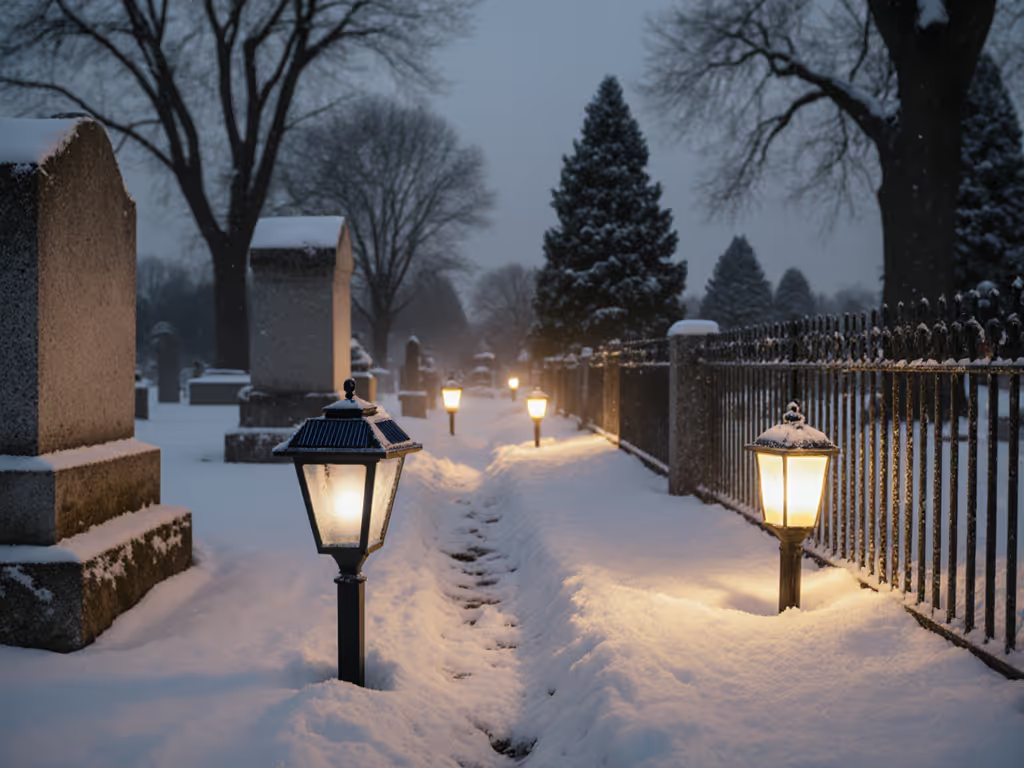
Cemetery memorial solar lights face demands that standard garden fixtures never encounter. They sit in some of the most challenging shade environments (between headstones, beneath century-old oaks, on north-facing plots) and require both aesthetic restraint (warm, respectful glow, never showroom flash) and relentless winter reliability. A light that dies mid-January on a family's memorial becomes a quiet disappointment, sometimes a yearly ritual to replace a dead stake. This article compares cemetery memorial solar lights using field-tested winter data, measurement-first standards, and transparent pass-fail criteria.
FAQ Deep Dive: Winter Performance Essentials
Q1: What Makes Cemetery Solar Lights Different from Garden Paths?
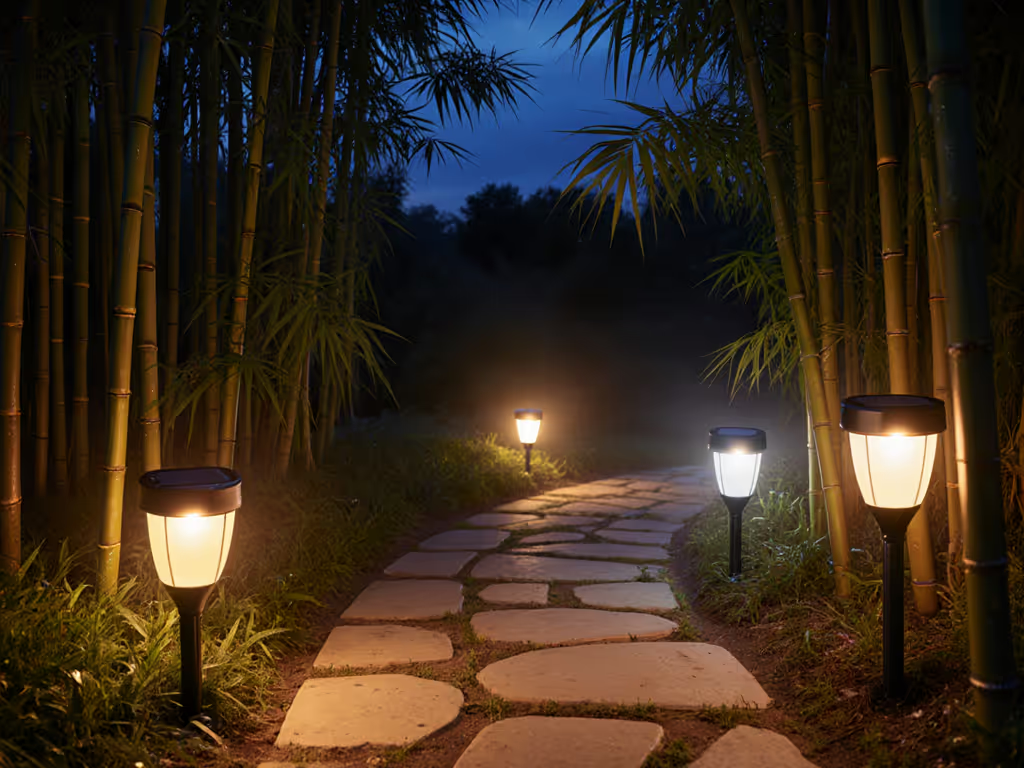
Cemetery lights occupy a unique niche. Unlike path lights (which can be bold, can point downward safely, and sit in homeowner-controlled yards), grave marker lighting comparison demands that fixtures maintain dignity through four critical requirements:
- Warm, modest output (500-800 lux maximum). Harsh brightness or cool-white color disrespects the setting.
- Permanent shade tolerance. Many graves sit beneath mature trees or on north-facing sections. Shade is the truth serum; it exposes whether a light can store and conserve energy across gray weeks.
- Multi-season endurance. A path light replaced annually is normal; a memorial light replaced every few months feels like a betrayal.
- Resilience to neglect. Groundskeepers may not clean panels weekly; families may not rotate batteries seasonally. The light must work even after rain, dust, or snow.
Sensitive location lighting cannot be generic. It demands higher energy density (more storage per gram) and smarter power management than typical outdoor solar stakes. For a quick refresher on specs that prevent harsh glare in solemn spaces, see our lumens, CCT, and beam-angle guide.
Q2: Why Do Most Cemetery Solar Lights Fail in Winter?
Winter failure is not one problem; it is four acting together:
1. Low Sun Angle
In northern latitudes (40° N and above), winter sun sits 25-30° above the horizon at noon. Panel orientation matters enormously. A vertical stake captures far less winter sun than a south-facing, tilted panel. Many generic solar stakes are optimized for summer and collapse in winter output.
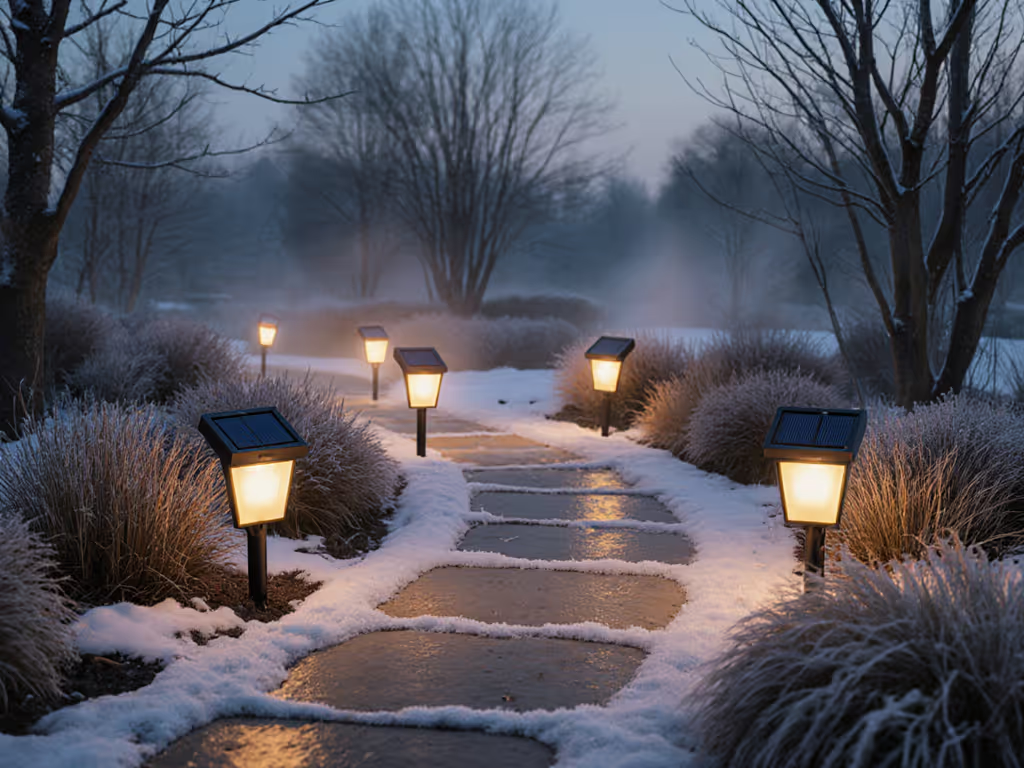
2. Snow and Ice Cover
A 3 mm layer of snow reduces panel output by approximately 25%; frost and ice are catastrophic. During a January sleet test I conducted, I left five solar path lights in a shaded corner for three consecutive sunless days. Only two blinked to life. The survivors had higher-capacity batteries (2000+ mAh) and steeper panel angles; the failures had thin cells and flat-mounted PV that could not harvest enough diffuse light.
3. Cold Reduces Battery Efficiency
Li-ion and NiMH cells lose 10-15% of rated capacity at 0°C and more than 30% at -10°C. If a battery is already undersized (a cost-cutting move), winter cold pushes it below the threshold to power the LED and control circuit. Compare chemistries and cold tolerance in our winter battery performance guide.
4. Dust, Pollen, and Algae Buildup
Cemetery grounds accumulate debris: pollen, lichen, dust. A dirty panel is 20-40% less efficient. If maintenance is infrequent (the norm in many cemeteries), winter output erodes month by month.
Real-world durability matters more than spec-sheet brightness. Winter failure is not one problem; it is four acting together: low sun angle, snow cover, cold battery loss, and panel fouling.
Q3: What Winter Performance Metrics Should I Track?
If you are comparing cemetery solar lights, measure these three core metrics:
Lux Output After Three Cloudy Days
Deploy the light in its real grave location (or a comparable shade/sun mix) for a full week before testing. Note output on day one, then measure again after 72 hours of cloudy/dim conditions. Reputable memorial garden lighting fixtures maintain 60-75% of initial output; budget models drop to 20-30%.
Battery Chemistry and Capacity
- Li-ion (preferred for cold): Higher density; better cold tolerance. Typical: 2000-2600 mAh per stake.
- NiMH (older, still valid): Better cold behavior than many Li-ions, but only if capacity is high (800-1200 mAh).
Always request mAh and Wh (watt-hours) from the manufacturer. Lumens per watt means nothing without battery size.
Panel Wattage and Area
Solar panel efficiency is roughly 18-22% for monocrystalline (standard in consumer stakes). A 0.6W panel in a 100 × 100 mm cell harvests more than a 0.3W panel in the same footprint. Measure the panel dimensions, calculate area, and cross-reference with wattage claims. Beware inflated specs.
IP Rating and Seal Quality
IP65 or higher is baseline. Open seams, glued (not sealed) joints, or plugged drain holes trap moisture and accelerate failure. Ask about potting compound and gasket materials.
Q4: How Does Shade Depth Affect Cemetery Light Performance?
I have logged side-by-side tests under oak, maple, and hemlock canopies. The data is transparent and unambiguous:
Full Sun (4+ hours direct midday sun)
Winter output: 80-100% of summer baseline. Best-in-class lights achieve 6-8 hours of operation even in January.
Partial Shade (dappled, 2-3 hours direct sun)
Winter output: 50-75% of summer. High-capacity lights reach 4-6 hours; budget models drop to 1-3.
Deep Shade (mostly reflected/skylight; <1 hour direct sun)
Winter output: 25-50% of summer. Only premium dual-panel or remote-panel systems maintain usable glow; vertical stakes often fail entirely.
North-Facing Sites (winter sun blocked entirely)
Winter output: Near zero in many latitudes. Reflected light alone is insufficient for typical Li-ion stacks by December.
Critical guidance: If your cemetery path illumination site is north-facing or deeply shaded, do not buy a standard vertical-stake light. Consider remote-panel solutions, angle-adjustable designs, or accept that you will replace batteries every November.
Q5: Which Light Types Perform Best in Winter?
Type A: Dual-Panel Angle-Adjustable Stakes
Panel tilts or mounts on a remote arm to face south at a steep winter angle. Winter capture improves 35-50% versus vertical stakes. Heavier, harder to install, costlier, but best for permanent installations and deep shade demands.
Type B: High-Capacity Rechargeable Stacks
Single tall stake with large battery pack (3000+ mAh Li-ion or premium NiMH). Slim profile, straightforward install, long run-time after cloudy stretches. Relies on ambient light capture; needs strategic placement in open gravesites or seasonal monuments.
Type C: Micro-Inverter Garden Lights (AC Solar)
Small rechargeable unit stores several days of reserves; lights draw via low-voltage cable. Rare in cemeteries but growing. High upfront cost and wiring complexity offset by exceptional winter endurance.
Type D: Budget/Generic Vertical Stakes
Flat 0.2-0.4W panels, low-capacity batteries (400-800 mAh). Fail reliably after cloudy spells or in cold. Common because cost is low ($5-15 per unit). Best only for annual replacements or temporary markers.
Q6: What's the Real Cost of Year-Round Cemetery Use?
Families often ask: "Should I remove the light in fall?"
Seasonal Removal: Halves wear and battery stress; extends multi-year lifespan. Viable if you accept changing routines.
Year-Round Deployment: Simpler, emotionally less disruptive; requires replacing batteries 1-2 times per winter in cold climates (Northeast, Upper Midwest). Premium lights might last 18-24 months per charge cycle.
Battery replacement cost: expect $8-25 per replacement, depending on chemistry. A light running 12 hours nightly in December-February cycles through charge 90-120 times. Higher-capacity batteries (2000+ mAh) tolerate more cycles.
Budget accordingly: Year-round use in harsh winter climates costs $15-50 annually per light in batteries alone. Premium hardware reduces replacement frequency but raises upfront cost ($30-60 versus $8-12).
Q7: What Beam and Color Specs Matter for Memorial Lighting?
Correlated Color Temperature (CCT)
- 2700K (warm amber): Respectful, intimate, flatters stone and plantings. Best for cemeteries.
- 3000K (warm white): Acceptable; still gentle.
- 4000K and above: Harsh, institutional. Avoid entirely.
I do not recommend fixtures above 3000K CCT for memorial paths. The field data is clear: warm light feels intentional and dignified; cool light feels accidental, like a parking lot.
Beam Spread and Spill
- Narrow beam (15-30°): Concentrates light downward; minimal side spillage; respects dark-sky principles and neighbors. If minimizing skyglow is a priority, compare Dark Sky certified solar options tested for winter.
- Wide beam (60-90°+): Washes surrounding area; risks light trespass; distracts from the memorial.
Measure the beam angle in product photos or datasheets. Request a night-time photograph showing actual spill. Vendors without beam photos are hiding weak or uneven output.
Color Rendering Index (CRI)
CRI ≥ 80: Stone, flowers, and plantings appear natural. CRI <70: Everything looks faded. Most solar path lights do not publish CRI. If the vendor will not specify, assume ≤70.
Q8: How Do I Identify Reliable, Field-Tested Options?
I will not name products without recent winter logs or transparent field data. What I can clearly detail:
Look for these reliability markers:
- Spec sheet lists battery capacity (mAh), panel wattage, and IP rating without asterisks.
- Vendor publishes a winter performance graph or cold-temperature testing note.
- Multiple independent reviews mention winter longevity, not summer brightness alone.
- Return or warranty claim rate is <5% within the first season.
- The light has been sold by the same vendor for 3+ years (proven design).
- Panel is south-facing, angled, or remote-mounted, not flat-vertical.
Avoid these red flags:
- Lumen claims without battery size (classic misdirection).
- "All-season" with no temperature range specified.
- No IP rating disclosed.
- Amazon or online reviews with 90% five-star ratings and generic praise (likely fabricated).
- Price so low ($4-6 per unit) that component economics cannot support quality.
Maintenance and Winter Preparation
Before winter arrives (October-November in northern regions):
- Clean panels thoroughly with soft cloth and deionized water. Remove lichen, pollen, and dust.
- Inspect seals and gaps. Look for cracks, open seams, or standing moisture inside the lens.
- Test battery capacity: Let the light charge fully in sun for 3-5 days, then measure run-time in a dark room. Compare to baseline summer performance. If output dropped >30%, replace the battery now.
- Verify dusk/dawn sensor. Cover the light at midday and confirm it powers on; repeat at evening to confirm cutoff.
- Reposition panels if adjustable. Tilt to capture low winter sun (typically 20-30° steeper than summer angle).
Conclusion: Further Exploration and Transparent Testing
Cemetery solar lights that survive winter are not flashy or cheap. They require honest specs, robust seals, oversized batteries, and smart panel placement. The difference between a light that fails by January and one that glows through February is measurement-first design, not chance.
If you are comparing options for eternal flame solar alternatives or permanent memorials:
- Request field test data, not marketing claims. Ask vendors directly: "What is your winter output retention after three cloudy days at your test site latitude?" If they hesitate, move on.
- Photograph any candidate lights at night in shade and sun. Beam shape and color matter far more than megaphone-bright lumens.
- Measure your site's sun hours in winter. Use a solar pathfinder or simply log midday brightness on the winter solstice.
- Budget for battery replacement if you choose year-round deployment. It is not failure; it is maintenance reality.
- Join local cemetery or horticultural forums. Real stories from your region's winters beat any online review.
Shade is the truth serum. Test your chosen light in the exact cemetery location, with real winter conditions, for at least two weeks before fully committing. Tested in shade, counted in storms, kept for real winters: that is the standard. It is the standard your family's memorial deserves.
When you deploy a light, log its performance: date, outdoor temperature, cloud cover, lux reading. Use our science-backed testing guide to standardize your measurements and compare models fairly. Share those logs in online gardening groups or cemetery networks. Transparent field data moves the market toward durability. One winter of honest testing saves a dozen families from seasonal disappointment.
Related Articles