Bamboo Garden Solar Lights: Temperature & Beam Comparison
By Hana Takahashi • 2nd May
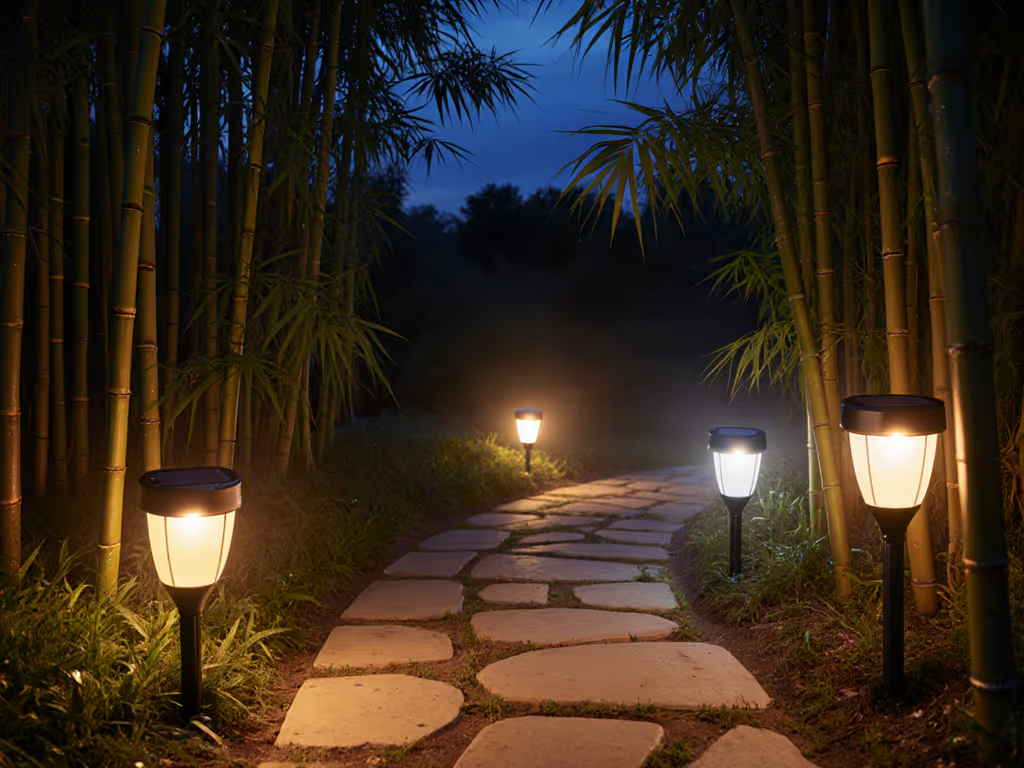
When lighting a bamboo garden, most people focus on brightness alone. But if you've ever noticed how certain path lights attract swarms of insects while nearby fixtures remain quiet, you've witnessed what spectral balance truly does. After logging light patterns in shaded plantings, I observed something revealing: a cool-white pathway fixture drew moths constantly, while a warm amber light just meters away sat nearly empty. The difference wasn't lumens, it was spectrum. That moment crystallized what I now apply to every garden solar lights recommendation: the right color temperature and beam design matter as much as the wattage itself.
Bamboo creates layered, rapidly expanding canopies that cast dappled shade and introduce complex moisture patterns into soil and air. When you introduce solar lights to these dynamic zones, those same properties (the shade, the vertical structure, the ecosystem activity beneath and around the culms) demand thoughtful choices about how light is delivered. Too much blue-rich spectrum disrupts nocturnal insects; too narrow a beam misses the textured architecture of bamboo; too wide a spread creates glare and light trespass. This guide unpacks the science and practical trade-offs behind color temperature, beam shape, and real-world performance when choosing plant-specific solar lighting for tropical garden lighting, with emphasis on bamboo texture illumination and vertical bamboo lighting strategies.
FAQ: Color Temperature, Beam Design & Solar Light Performance
What is color temperature, and why does it matter most in a bamboo garden?
Color temperature, measured in Kelvin (K), describes whether light appears warm (orange-yellow, 2700-3000K) or cool (white-blue, 4000K+). In a bamboo setting, this single choice shapes both visual beauty and ecological impact.
Warm light (2700K-3000K) reveals the golden undertones of bamboo culms and emphasizes deep green foliage without harshness. Critically, warm spectrum minimizes attraction to nocturnal insects. Moths, beetles, and other pollinators show far weaker response to warm wavelengths than to blue-rich light. This isn't neutral: every insect drawn to a light fixture is energy diverted from foraging and reproduction; accumulated exposure disrupts breeding cycles and disrupts food webs that birds and bats depend on.
Cool or daylight-white light (4000K and above) makes bamboo appear flat and clinical, can create an insect-trap effect when aimed at foliage, and contributes directly to skyglow, the loss of starlight that darkens night skies and disrupts bat navigation and breeding behavior. If minimizing skyglow is a priority, consider Dark Sky certified solar fixtures tested for glare-free performance. For wildlife-friendly bamboo gardens, 2700K to 3000K is the only responsible threshold. If a solar light vendor offers only cooler options, treat it as a filter-and-compromise or budget it for short timers (turning off by 10 PM) rather than all-night operation.
How do beam angles shape the look and function of vertical bamboo lighting?
Beam angle (beam spread) describes how wide light disperses from the source, typically 15° to 120° or wider in consumer solar fixtures. For vertical bamboo lighting, this choice determines whether the fixture reveals structure, texture, or ambient space. For a deeper dive into pattern choices, see our beam pattern comparison for when to use spotlights, floods, and ambient lanterns in gardens.
-
Narrow beams (15°-30°): Spotlight effect; high intensity per square inch. Best for accent lighting on specimen culms or the main stems of a featured clump. Creates dramatic shadow play and emphasizes vertical lines. Risk: can miss leaf detail and create harsh shadows that flatten the form.
-
Medium beams (40°-60°): Balanced illumination; reveals both culm detail and bamboo texture illumination in fine foliage and branching. Ideal for path lighting alongside bamboo screens or multi-stem groves. Versatile and easy to shield to prevent light trespass.
-
Wide beams (90°-120°+): Flood-style illumination; useful for safety on steps or deck edges bordered by bamboo. But wide beams scatter light inefficiently, often causing glare unless paired with effective shielding and proper mounting height.
The principle: narrower and medium beams allow shielded placement (fixtures mounted low, angled downward and toward plants) so light reaches the intended area without spilling skyward or onto neighbors' windows. Wide beams require taller mounting and more careful siting, increasing installation complexity and risk of trespass.
What role does Color Rendering Index (CRI) play in tropical plant lighting?
Color Rendering Index (CRI) measures how faithfully a light source reveals true colors (scale 0-100, with 100 being perfect). Many budget solar lights claim CRI 80+, but poor spectrum balance or phosphor quality undermines the claim.
Under warm light with high CRI (90-95), bamboo foliage reads as deep, natural green, and pale culms reveal subtle silvery or golden undertones. Under low-CRI warm light (70-80), the same plant looks washed-out or muddied. For plant-specific solar lighting, a CRI of at least 85 is practical; 90+ is preferable if budget allows.
In field practice, pairing a high-CRI, warm solar fixture (2700K, CRI 90+) with a shielded, medium-beam design creates a garden that appears vibrant and inviting at night while respecting the ecosystem. Protect the night to enjoy the enhanced beauty of the plants themselves.
How does solar light performance degrade in shaded bamboo areas?
Bamboo thrives in partial shade and creates layered canopies that block direct sunlight. Learn how dappled shade affects charging in our science-based shade guide. This is ecologically ideal but poses a solar-charging challenge: panels in shadow receive far less photon energy than panels in direct sun, reducing charging efficiency and run-time per charge cycle.
In a shaded bamboo grove:
-
Standard stake lights (small 0.5-1W panels, integrated battery) often fail to charge adequately, delivering 3-5 hours of light instead of the promised 8+, or dimming noticeably by mid-evening.
-
Higher-efficiency panels (1.5-2W monocrystalline) capture more energy from diffuse, reflected light, extending run-time to 7-10 hours even after cloudy days or in partial shade.
-
Tileable or remote panels (on a separate wire or adjustable mount) allow you to position the panel in a sunnier microclimate (perhaps on a fence top or nearby deck) while the light fixture remains in the shaded bamboo zone. This hybrid approach is the most reliable for deep shade.
Practical approach: In heavily shaded sites, invest in a solar light with remote-panel capability or higher wattage, the upfront cost is recouped through consistent, multi-season performance. If budget is tight, use standard stake lights only in open zones, and reserve shaded placements for accent lights or lower-priority paths.
Why is warm spectrum non-negotiable for wildlife-friendly tropical plant lighting?
This choice is unambiguous: warm spectrum (2700K-3000K) always wins for supporting nocturnal ecosystems in tropical garden lighting or any outdoor space with wildlife.
Research and field observation confirm repeatedly that insects, especially moths and nocturnal pollinators, show far weaker attraction to warm spectrum than to cool-white or daylight sources. Blue-rich solar lights can create an "insect trap" effect, drawing organisms away from natural food sources and increasing predation vulnerability. Over time, excessive blue-spectrum illumination near gardens also disrupts circadian rhythms in birds, small mammals, and insects, affecting breeding success, sleep architecture, and population stability.
For tropical garden lighting, warm spectrum offers a secondary advantage: it complements the lush greens and warm earth tones of tropical foliage, bamboo, palms, ferns, bromeliads, without the cold, artificial look of daylight-white. Your plants reveal their true character.
Absolute rule: Avoid any solar light rated above 3000K CCT in a garden intended to support wildlife. If only cool-white options are available, use timers to limit operation (off by 10 or 11 PM) and position fixtures low, behind screening, or under eaves to contain the light.
Assembling a Cohesive Strategy
The strongest garden solar lights for bamboo combine three non-negotiable elements:
-
Spectrum: Warm only (2700K-3000K CCT; CRI 85+ if possible)
-
Beam: Medium-width (40°-60°) for balanced texture visibility and straightforward shielding
-
Durability: IP65 or higher rating, stainless hardware, UV-resistant lenses, and powder-coated aluminum to withstand rain, freeze-thaw cycles, salt air, and seasonal weather extremes
When these three elements align, you create a garden that feels welcoming, reveals the architectural beauty of vertical bamboo lighting, and doesn't harm the insects, birds, and nocturnal creatures that share the space. Warm, shielded, and timed: light that wildlife can live with.
For bamboo texture illumination, position warm, medium-beam fixtures at the base or upwind side of plantings, angled slightly upward to catch culm surface and branching detail without spilling into the canopy. For specimen or screening applications, narrow beams (20°-30°) with higher lumen output provide drama at distance while keeping total light output modest.
Winter Performance in Variable-Climate Regions
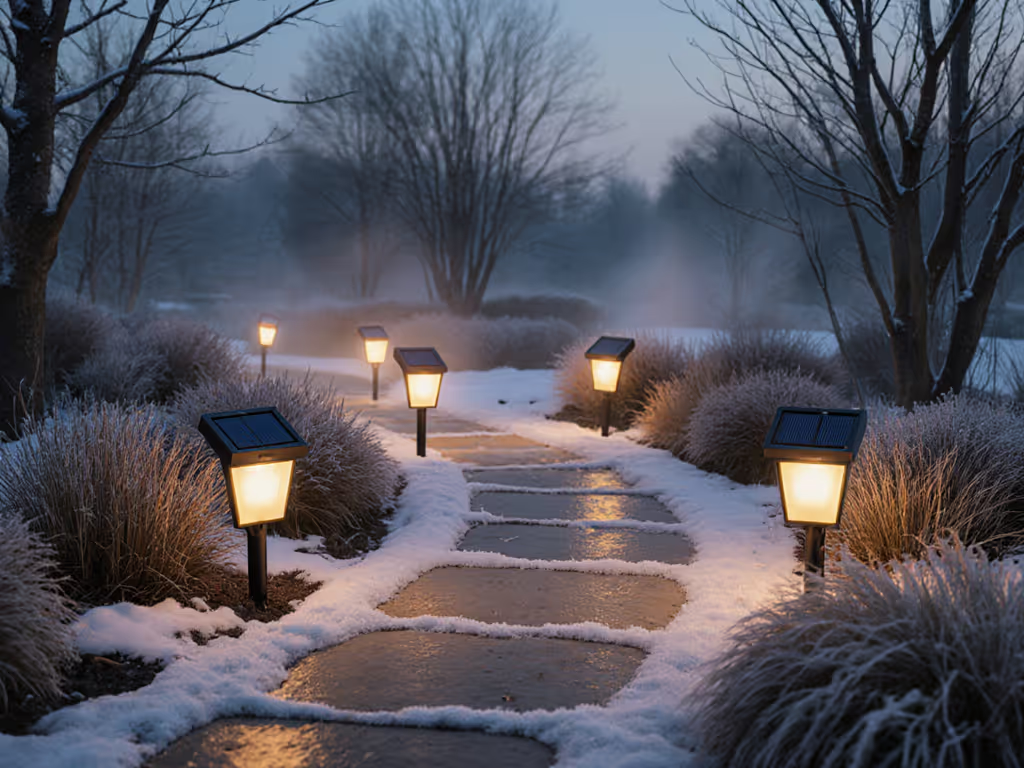
In regions with short winter days or extended cloud cover (common from the Pacific Northwest through the Northeast, Upper Midwest, and mountain valleys), solar light performance drops sharply. For cold-weather reliability, review how different solar light battery types compare in subfreezing conditions. A fixture rated for 10 hours of summer operation may deliver only 4-6 hours in December or January, especially if panels sit beneath bare or evergreen foliage.
Extend winter run-time through three strategies:
-
Use timers: Set lights to activate at dusk and deactivate by 10 or 11 PM, conserving battery while maintaining early-evening ambiance and pathway safety.
-
Clean panels monthly: Dust and pollen reduce solar charging efficiency by 10-20%. A quarterly wipe preserves performance.
-
Site for maximum winter sun: Even shifting a fixture 3 feet north (away from deep afternoon tree shade) can improve winter charging by 30-40%.
Further Exploration
As you evaluate plant-specific solar lighting for your bamboo garden, reject the premise that brightness alone measures quality. Instead, prioritize warm spectrum (2700K-3000K), medium beam angles (40°-60°), high CRI (85+), durable materials, and verified IP ratings.
Begin with one or two carefully chosen fixtures, positioned in representative zones (full sun, partial shade, heavily shaded). Monitor performance through a full seasonal cycle, especially winter or your rainiest season. Observe how the light reveals your bamboo, whether insects congregate, and how long battery reserves endure. Then scale your success with confidence.
The ambition isn't to flood your garden with light; it's to make the bamboo and the surrounding landscape legible and safe at night, without sacrifice to starlight, sleep, or the creatures whose lives depend on darkness. Let warm, considerate lighting become part of how your garden sanctuary functions after sunset.
Related Articles