Balcony Solar Lights: Which Survive Winter & Shade?
By Luis Ortega • 23rd Feb
Finding garden solar lights and balcony solar lights that actually work year-round feels impossible when you're surrounded by broken plastic spikes and dead batteries every February. The real challenge isn't the technology, it is matching the right fixture to your site's sun hours, winter daylength, and microclimate. This guide walks you through what the testing labs found, what fails in the field, and how to pick lights that earn their place on your balcony or deck.
Why Do Solar Lights Fail in Winter?
Q: Do solar lights actually work when it's cold and gray outside?
Yes, but with significant performance loss. The physics is straightforward: winter days are shorter, the sun sits lower, and clouds linger. This isn't a design flaw, it's the season. In December, a location like St. Paul, Minnesota receives only 2.2 sun hours per day, versus 5+ hours in summer[4]. That means your solar panel has roughly 40% of the charging time and 30% of the intensity. Long winter nights compound the problem; a light sized for summer's short, bright nights will fully drain its battery before dawn in January[4].
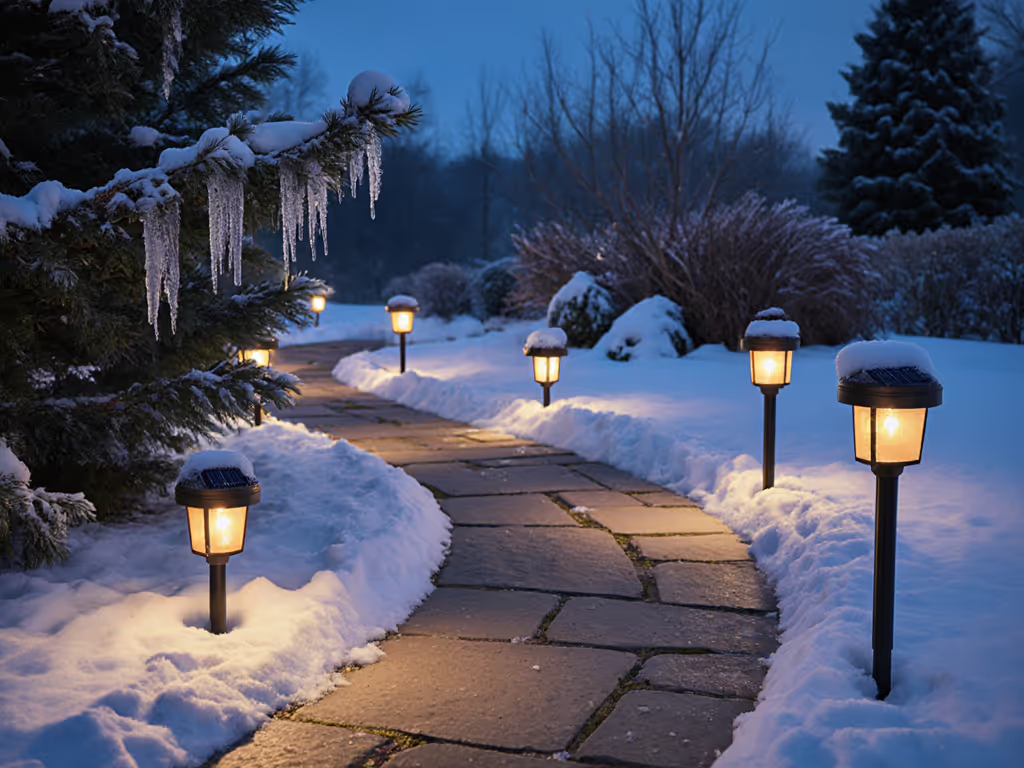
Snow directly on the panel is the second killer. Even a thin layer blocks 80-90% of light transmission. A tester who monitors 29 solar motion lights found that after overcast, snowy conditions, several brands simply didn't illuminate because the panels were totally snow-covered and the batteries hadn't recharged[2]. The next day, after bright sun, every light worked again[2].
Cold batteries also underperform. See how different battery types handle freezing so you can choose cells that won't quit in January. Most consumer-grade lithium and NiMH cells lose 20-40% of their capacity below freezing. The battery doesn't fail, it just stores less energy in the cold and delivers less current to the LEDs[3].
Q: Which lights handle winter best?
Lights with these traits consistently outperform in winter testing:
- Larger solar panels. A frost-resistant, oversized panel can pull enough charge even on gray December days[1]. Compact pea-sized panels, no matter how many LEDs they drive, simply can't.
- High-quality, warm-toned LEDs. Reviewers note that some 120-LED lights actually perform better than later 138-LED models because they were warmer in color temperature and brighter per unit[2].
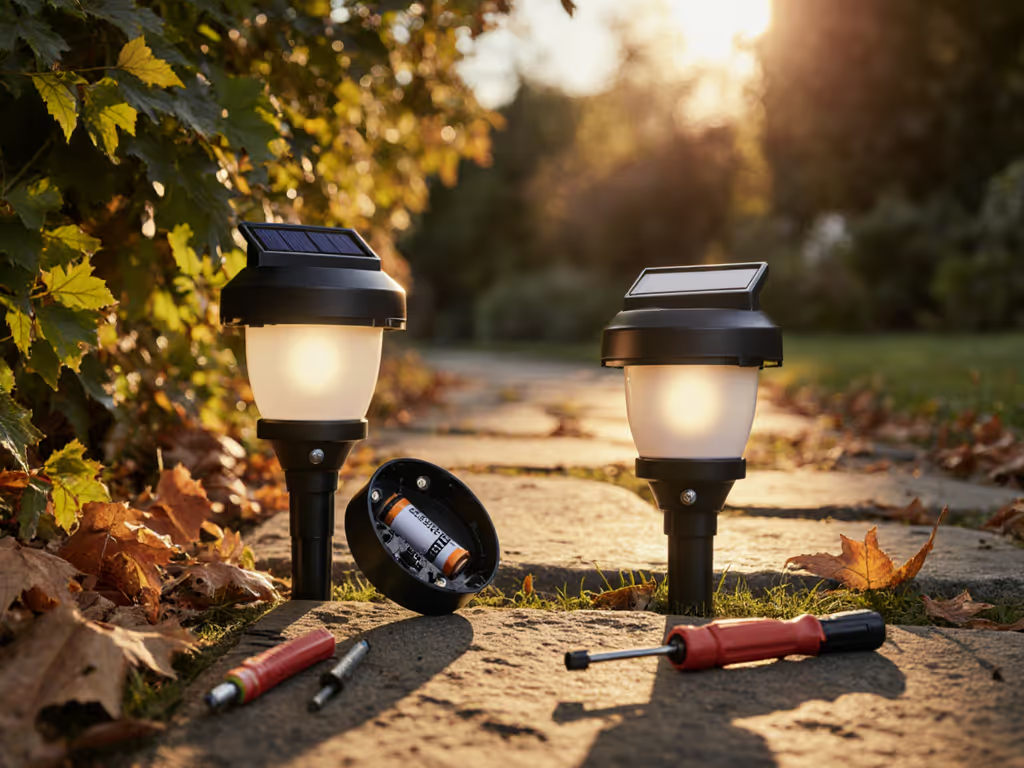
- Replaceable, larger-capacity batteries. Lights that allow you to swap in high-performance NiMH or lithium cells rated for cold weather outlast sealed units[3].
- Weather resistance (IP44 or higher). Poor seals corrode and trap water; water in winter becomes ice, and ice expands[1].
- Dusk-on, timer options, or power-saving modes. A light that reduces brightness in winter but doubles runtime extends usable hours[1].
Lights tested across summer and winter showed clear winners: models with robust panels and reliable seals still illuminated from dusk through dawn in summer; in winter, these same lights came on reliably after a bright recharge day, even from a north-side position[2].
Shade, Winter, and the Sun-Hours Reality
Q: Can solar lights work in shade year-round?
Rarely, and almost never in deep shade under evergreens. The math doesn't favor it.
Shade cuts available sunlight by 50-80%, depending on tree density and position. If a sunny south-facing balcony receives 4 winter sun hours, a north-side wall might get 1.5 hours. A light designed for 3 sun hours to fully charge will begin to fail when sun hours drop below 2.2[4]. That means shaded sites need either a much larger panel, a remote panel placed elsewhere, or acceptance of very short runtimes.
Where shade does become manageable is on east or west-facing balconies with morning or afternoon sun. A balcony that gets 3-4 hours of direct sun in winter (even if dappled) can sustain most landscape-grade garden lights. For the physics of dappled vs continuous shade, see our science-based shade charging guide. The key is seasonal positioning: in summer, that same spot might sit in full sun for 6-7 hours; in winter, shadow length shifts, and the angle changes[3].
Q: What's the workaround for shaded balconies?
A remote panel or tilting panel mount. Our accessory guide covers remote panels, extension cables, and brackets that boost shade performance. If your balcony itself is shaded but a nearby railing, pergola, or fence post sits in sun, run the cable and mount the panel there. This is why lights with longer cables between panel and stake outperform those where the panel sits on top of each fixture. Tests of string lights with 3-meter cable runs between panel and first bulb showed they turned on earlier at dusk and lasted longer into morning[1].
Second, consider brightness trade-offs. A light set to 50% brightness on overcast days will run twice as long on the same charge[1]. If your goal is low-level path or deck glow rather than area illumination, accepting dimmer output buys you all-season reliability in marginal light.
Comparing Real-World Performance: What Reviewers Found
Q: What's the difference between "tested" winter performance and marketing claims?
Consider the gap between lab scores and field durability.
Reviewers testing landscape solar lights and garden lights over full summer and winter cycles noted that the best models "lasted through the night and right up until dawn" in summer, even if not switched off[1]. In winter, those same lights still powered on at dusk, though runtime dropped from 10+ hours to 6-8 hours[1]. The plastic-coated stakes and seals remained weatherproof through freeze-thaw cycles.
Weaker models (plastic spikes with thin seals) fogged internally within months. Some had slow-to-trigger dusk sensors, taking 10-20 minutes to turn on. Others were too dim; reviewers described them as "a little dim, especially from a distance[1]." A white-light LED that looks bright at arm's length becomes nearly invisible at 10 feet, particularly in a balcony setting where you're viewing the light from directly above rather than head-on.
Q: How do I interpret sun hours and runtime claims?
Sun hours is not wall-clock hours of daylight; it's equivalent hours of peak (1000 W/m²) solar irradiance. A hazy day with 8 hours of daylight might yield only 2 sun hours[4].
Runtime is often claimed in best-case conditions: full charge after a clear day, 25°C ambient, 50% brightness or motion-only mode. Expect real winter runtime to be 30-50% lower[4].
Transparent specs list battery chemistry (NiMH vs. lithium), capacity (mAh), and panel wattage. Brands that hide these are betting you won't ask. Trustworthy makers list IP rating (water/dust seal level), warranty length (2 years is standard for quality), and note whether batteries are replaceable[1]. Decode real coverage vs fluff with our solar light warranty guide.
Setup That Survives: Placement and Anchoring Checklist
Q: What's the single biggest mistake people make when installing balcony solar lights?
They neglect the stake. After years of testing, I've learned that secure the stake, then the light takes care of you. A wobbly spike will topple in high wind, snow weight, or rain gust, and once the stake bends, the solar panel tilts away from the sun, charging fails, and the light dies even if the battery and LED are fine. You've replaced a $30 light because a $2 stake wasn't anchored.
On a balcony or deck, anchor each spike by:
- Clear the soil or surface. Remove mulch, moss, or debris to bare wood, composite, or soil.
- Pre-drill or pre-score frozen ground. In late fall or winter, soil hardens. A 2-inch auger hole or a heavy stake-hole digger takes 30 seconds and doubles penetration depth compared to straight pushing[3].
- Set a gravel collar. Pour pea gravel in a 4-6 inch ring around each spike base. It sheds water, prevents frost heave, and stabilizes the stake[3].
- Check the angle. Sun first, symmetry second. Tilt the light's panel to face south (or the winter sun azimuth in your zone) at roughly 45° angle[3]. A panel facing north or straight up charges half as fast. Symmetry in a row looks nice, but a light aimed at a wall or tree is wasted.
- Inspect after storms. Wind and snow load shift stakes. A monthly visual check (especially in winter) catches problems before the battery fully drains.
For deck or balcony railings, consider clamp mounts or magnetic brackets rather than ground spikes. A spike driven into composite decking or gravel-filled planters is weak; a railing clamp secures the light without penetration and allows angle adjustment mid-season.
Urban Balcony Illumination: The Shade-and-Winter Case Study
Q: I have a north-facing balcony that gets afternoon shadow and freezes solid. What works there?
This is the hardest scenario. Direct sun is minimal, winter nights are long, and ice can seal battery compartments.
Your best options:
- Motion-only or dusk-to-11pm timer mode. Reduce runtime demand by turning off the light at 11pm and running motion-detection only after that. A light that sits dark most of the night but illuminates when someone steps outside uses 60% less energy[1].
- Higher-efficiency panels with remote positioning. A light with a 1-meter cable and separate panel lets you mount the solar cell on a south or west-facing rail corner while the LED sits where you want it[1].
- Accept lower brightness. A 50-lumen warm light at 40% brightness is sufficient for step safety and ambiance, and will run longer on limited charge than a 200-lumen full-brightness model.
- Insulate battery compartments in deep winter. Wrap the housing base with reflective foil or thermal tape in December-January to keep internal batteries slightly warmer[3]. This is temporary; remove it in spring.
- Clear panels after snow. A soft brush or cloth over the panel after each snow event is 30 seconds and the difference between working and dead[3].
If the balcony is truly all-shade, relocate the panel to a sunny corner post, pergola, or fence rail 8-15 feet away. The cable run is inconvenient but invisible under railing or along fascia, and your light will actually charge.
Maintenance and Winter Prep
Q: What's the maintenance checklist before winter and during?
- September-October: Clear leaves and debris from panels and light lenses. Test lights on a cloudy day; if they're dim, batteries may already be aging. Replace if needed.
- November: Check seals around battery compartments. Corrosion or white powder means water entry; replace the light or reseal with waterproof silicone.
- December-February: After snow, brush panels. If a light fails, check that the panel faces the sun and isn't shaded by new ice dams or snow drifts.
- March: Inspect stakes, connectors, and housing for cracks. Replace batteries if performance hasn't improved.
- June: Baseline test in long-daylight conditions. Lights that pass summer should carry you through next winter.
Actionable Next Step: Choose Your Balcony Light
Prioritize by your site:
If you have 3+ winter sun hours and moderate freeze risk: Choose a light with a large (10+ cm) frost-resistant panel, warm-toned LEDs, and replaceable batteries. Plan for 6-8 hour runtime and accept dimmer output on cloudy weeks.
If you have 1.5-3 winter sun hours or heavy shade: Remote panel or dusk-to-11pm timer mode is non-negotiable. Expect 3-5 hour runtime. Accept that cold snaps reduce brightness, and budget annual battery replacements. Before you buy, compare battery replacement options to avoid sealed designs that cost more long-term.
If you have less than 1.5 winter sun hours: Balcony solar lights alone won't work reliably. Consider a hybrid: solar by day on a sunny corner, supplemented by a battery-backed LED or USB-rechargeable light moved indoors during extended dark spells.
Once you've identified your winter sun hours and chosen a light type, focus on secure the stake, then the light takes care of you. A $50 light in a well-anchored, sun-facing position will outperform a $150 light wedged under a tree or toppling in wind. Pre-drill, set gravel, tilt for sun, and inspect after storms. Small setup habits (not expensive fixtures) deliver year-round reliability.
Your balcony will glow from dusk through evening, even in January, if the frame is solid and the panel sees winter sun. That's earned light.
Related Articles