Solar Light Warranty Guide: Unmask Real Coverage vs Hype
By Maya Lindstrom • 17th Dec
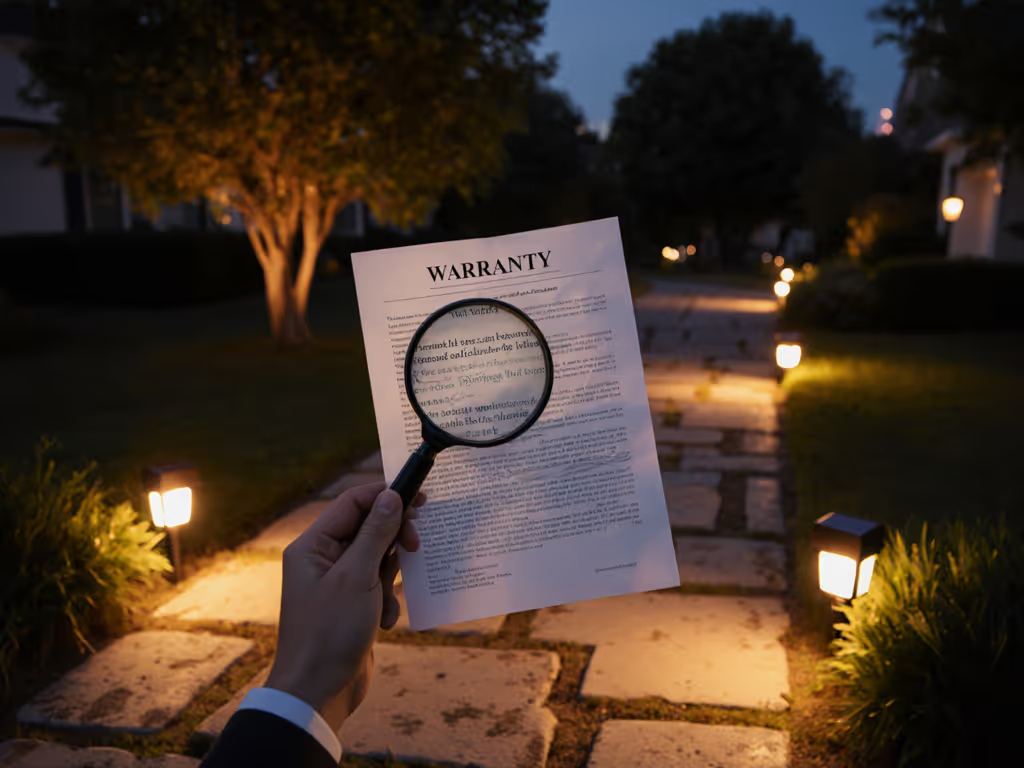
When you invest in solar garden lighting, you're not just buying fixtures, you're investing in tranquil evenings, safe paths, and the subtle glow that makes your garden feel like a sanctuary. Yet too often, homeowners discover too late that their solar light warranty guide was less about protection and more about fine print. This lighting warranty explanation isn't just technical jargon. It is the difference between a garden that glows warmly all season, or one that fades into darkness just when you need it most. Let's clarify what truly matters beneath the surface of warranty promises.
Why Solar Lighting Warranties Feel Like Broken Promises
Picture this: You've carefully placed warm-path lights along your hosta bed, creating a ribbon of soft 2700K light that guides guests without startling the night. Then, by midwinter, half the stakes flicker out after three cloudy days. The manual claims "25-hour runtime," but in reality? That number assumes perfect summer sun. For realistic expectations across the year, see our seasonal solar light performance guide. Worse, when you contact the manufacturer, you learn water damage from December sleet isn't covered. This isn't just inconvenient, it shatters the peaceful atmosphere you worked so hard to cultivate.
I still remember when my neighbor replaced her glaring path markers with shielded bronze spikes. She beamed when they survived that brutal February freeze. But weeks later, the batteries swelled and leaked, ruining the finish. If you live with harsh winters, compare battery types for cold weather before you buy. "The warranty covered replacement," she told me, "but not the rust stains on my stone path." That moment cemented my belief: Beautiful light hides the source and honors the night, including warranties that honor real-world conditions. Warm first, always.
How Warranty Limitations Sabotage Your Garden Ambiance
Most homeowners don't realize solar lighting warranties fall into three critical categories, each with hidden gaps that directly impact your garden's nighttime experience: If specs like lumens, CCT, and IP ratings confuse you, this glare-free lighting specs guide breaks them down.
-
Performance Warranty: Guarantees minimum brightness output over time (e.g., "80% output after 5 years"). Reality check: Cheap lights often degrade rapidly in cold climates, shifting from warm 2700K to harsh blue tones as cells deteriorate. If your warranty ignores color temperature stability, your cohesive garden glow becomes a patchwork of mismatched light.
-
Product Warranty: Covers defects in materials/workmanship (typically 1-5 years). The trap: "Weatherproof" claims often exclude snow load or freeze-thaw cycles. One client's polished aluminum stake warped after two winters, technically "covered," but the replacement didn't match the original's finish, ruining her garden's harmony.
-
Workmanship Warranty: Addresses installation flaws (rare for DIY solar). Critical omission: Most warranties void coverage if you place lights in partial shade, yet that is where garden paths naturally live. This ignores the very conditions homeowners face under oak trees or against north-facing fences.
Reading Warranty Claims Like a Landscape Lighting Specialist
Manufacturer coverage details often hide critical limitations behind glossy brochures. Here's how to spot what truly protects your garden investment:
Key Questions to Ask Before Buying
-
"What real-world conditions are excluded?"
Watch for phrases like "when installed per specifications." Translation: If your north-side path only gets 3 hours of sun (common in tree-heavy neighborhoods), coverage vanishes. Demand data on performance in 1,500-lux conditions, not just desert sun. -
"Does it cover color temperature shift?"
Cheap LEDs often drift above 3000K as they degrade. A true dark-sky-friendly warranty should specify CCT stability (e.g., "±200K shift max over 3 years"). Without this, your warm sanctuary turns into a blinding glare zone. -
"What's required for the warranty claim process?"
Some brands demand photos of the original receipt and the faulty unit's serial number within 14 days. If your light fails mid-storm, this turns a simple fix into a bureaucratic nightmare.
When Extended Warranty Options Are Worth It (and When They're Not)
"Warm first, always" isn't just about light color, it's about warranties that respect how you live in your garden.
Consider extended coverage only if:
- It explicitly covers partial-shade performance (e.g., "stable output at 4 hours daily sun")
- It includes labor for fixture replacement (not just parts)
- It addresses cold-weather battery failures (critical for Mountain states or Canadian winters)
Avoid "lifetime" warranties that shift responsibility to third-party service centers, these often void coverage if you replace batteries yourself (a common DIY fix). Choosing repairable solar lights can cut long-term costs even when warranties fall short.
The Unspoken Truth: How Seasons Test Your Warranty
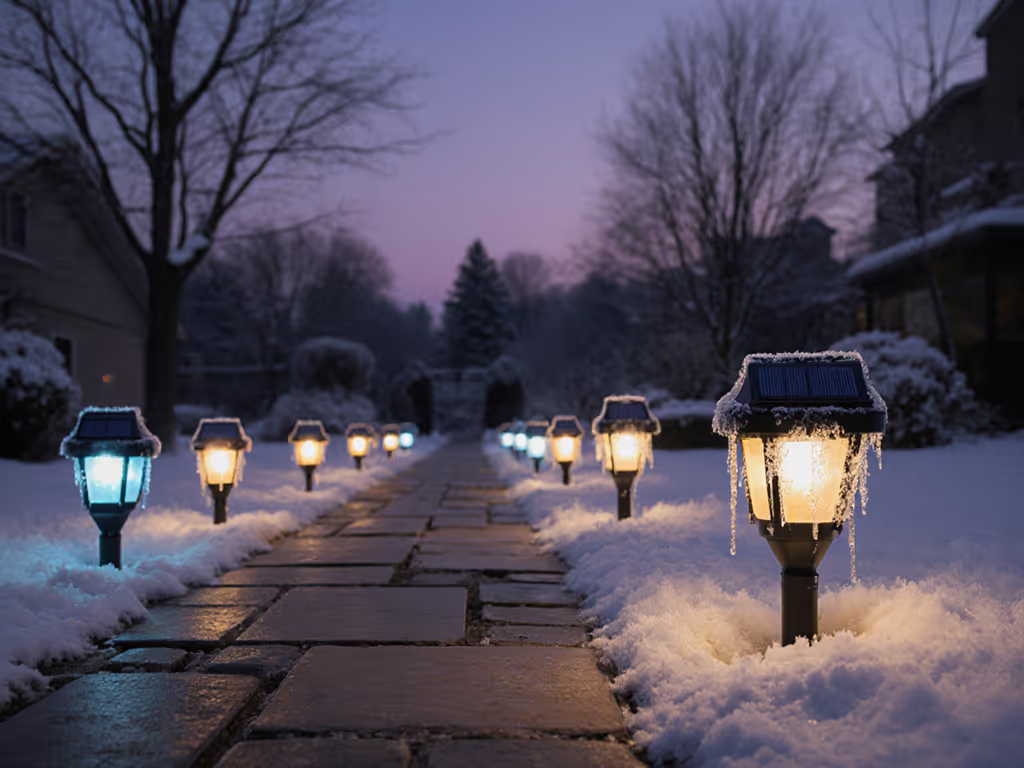
Your lights face their toughest test not in summer, but when:
- Snow covers panels (December to February)
- Temperatures drop below freezing (battery strain)
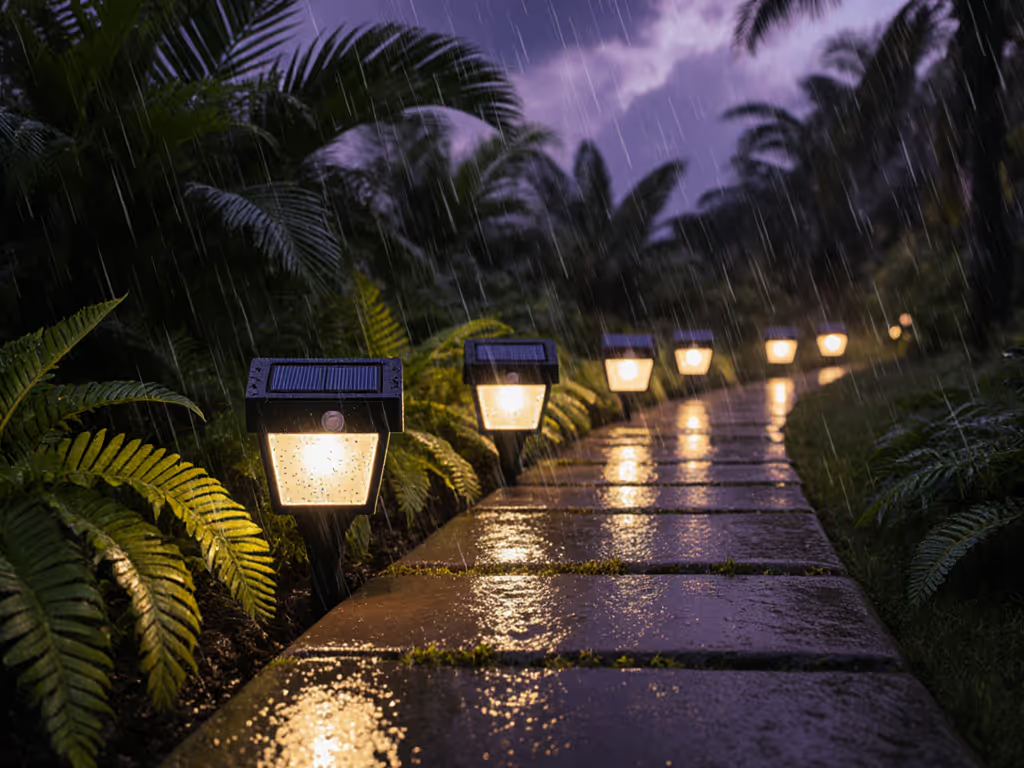
- Cloud cover persists for days (Pacific Northwest winters)
A quality warranty acknowledges this. Look for clauses like "maintains 50% runtime after 72 hours of zero sunlight," not just "25-year performance" with no seasonal context. One reputable brand I've tested actually includes winter-temperature benchmarks in their manufacturer coverage details, ensuring paths stay safely illuminated even in January.
Your Action Plan: Secure the Garden Glow You Deserve
Don't let warranty gaps dim your nights. Before installing another stake:
-
Audit your current warranty tonight
Grab your manual. Highlight every exclusion related to weather, shade, or maintenance. If it says "void if exposed to salt air" but you live near the coast, that is a red flag. -
Demand proof of seasonal testing
Contact brands directly: "Show me your data for 20°F temperatures with 60% cloud cover." Reputable companies share this. For a snapshot of brands that stand behind their products, read our warranty and longevity analysis. Hesitation means their warranty is more hype than protection. -
Prioritize replaceable components
Choose fixtures where batteries and panels can be swapped without tools. Even the best warranty feels hollow if you must replace the entire unit when one part fails.

When your lights work with the garden, not against it, you'll hear crickets instead of worrying about failures. You'll see safe paths without squinting. And yes, you'll let the garden glow, never the fixture staring back. That is the true measure of a warranty worth its weight in gold.
Take action tonight: Reread your warranty's exclusions section by lamp light. Cross-reference each limitation against your garden's toughest spots (that shady corner by the fence, the path where snowdrifts linger). If coverage doesn't match reality, reach out to the manufacturer with the three questions above. Your sanctuary deserves nothing less.
Related Articles