Solar Light Charging Cycles: Extend Battery Life
By Rohan Patel • 19th Feb
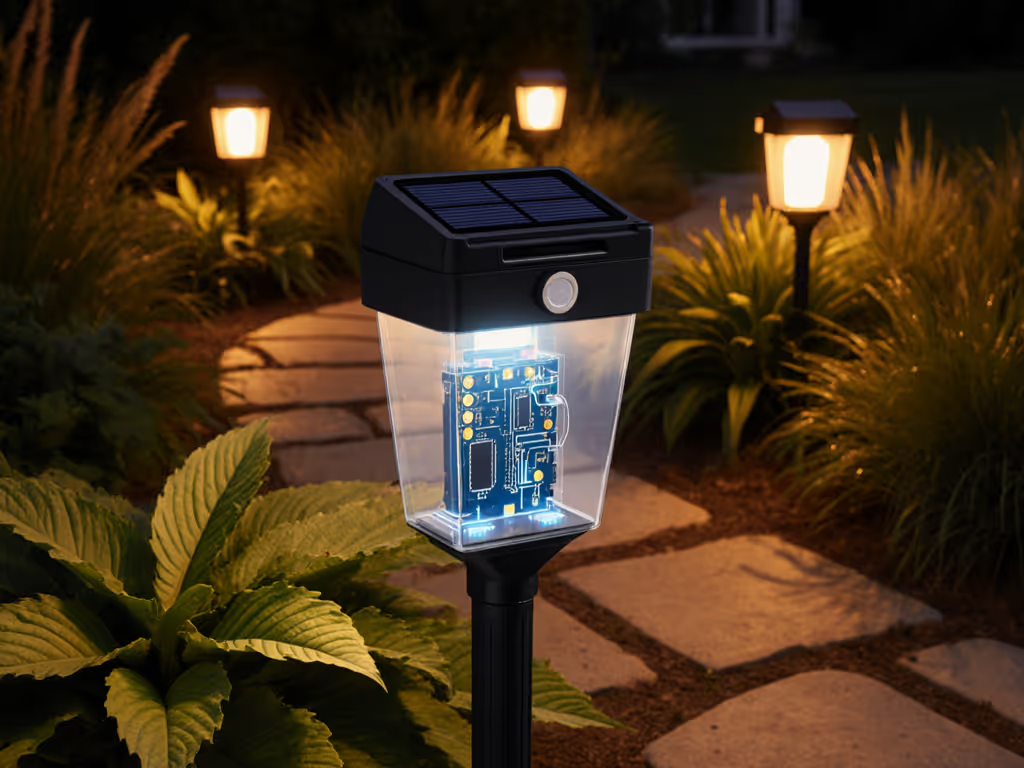
Understanding solar light charging cycles and battery longevity optimization separates garden lights that die after one winter from fixtures you'll trust for a decade. Most homeowners never think about charge-cycle mechanics until a light quits mid-December, which is exactly when you learn whether you bought durability or marketing. I measure this constantly, logging temperature drops, tracking dawn-to-dusk output after consecutive gray days, and counting which batteries survive seasonal stress. The math behind cycle life determines whether your investment lasts 2 years or 15.
What Exactly Is a Charge Cycle, and Why Does It Matter?
A charge cycle is one complete journey from full discharge to full charge and back to discharge. Think of it like a tank of gas: each fill-up and empty counts as one cycle. Your solar light's battery undergoes a charge cycle every sunset and sunrise, assuming adequate sun exposure. If you're new to the tech, start with our how solar lights work guide.
Why it matters: lithium-based batteries in quality solar lights can endure 3,000 to 5,000+ partial cycles before significant degradation, while older nickel-metal hydride (NiMH) chemistries peter out after 1,000 to 2,000 cycles. That difference translates directly to years of reliable operation.
Field-tested, not brochure-tested, this metric separates fixtures I kept after a January sleet storm from the ones I tossed. The batteries that survived shade and rain for three sunless days logged fewer, shallower cycles during those gray stretches, which is exactly what a well-designed charging controller should enforce.
Depth of Discharge: The Lifespan Multiplier
Depth of discharge (DoD) measures what percentage of a battery's capacity you extract before recharging. A 50% DoD means you use half the battery's energy; an 80% DoD drains four-fifths.
Manufacturers recommend limiting DoD based on battery chemistry:
- Lithium-ion (Li-ion): optimal performance at 50-80% DoD
- Lead-acid: best at 50% DoD or lower
- Lithium Iron Phosphate (LiFePO₄): can tolerate up to 80%+ DoD safely
The relationship is counterintuitive. A battery discharged only to 50% DoD each cycle might complete 5,000 cycles before failing, while the same battery drained to 80% DoD daily might fail at 2,000 cycles. Paradoxically, shallower discharges mean fewer total cycles but longer calendar lifespan because you're drawing less wear per day.
In practical garden-light terms: if your solar stake only needs to power a 0.5-watt LED for six hours nightly, the charging controller should keep the battery between 20% and 80% charge, rarely touching the top 20% or bottom 20%. This breathing room adds years.
How Temperature Stress Degrades Battery Life
Temperature is the silent killer. Batteries perform best between 20-25°C (68-77°F). For every 8°C rise above 25°C, battery lifespan can drop by up to 50%. Conversely, freezing temperatures reduce both capacity and charging efficiency, especially in lead-acid designs.
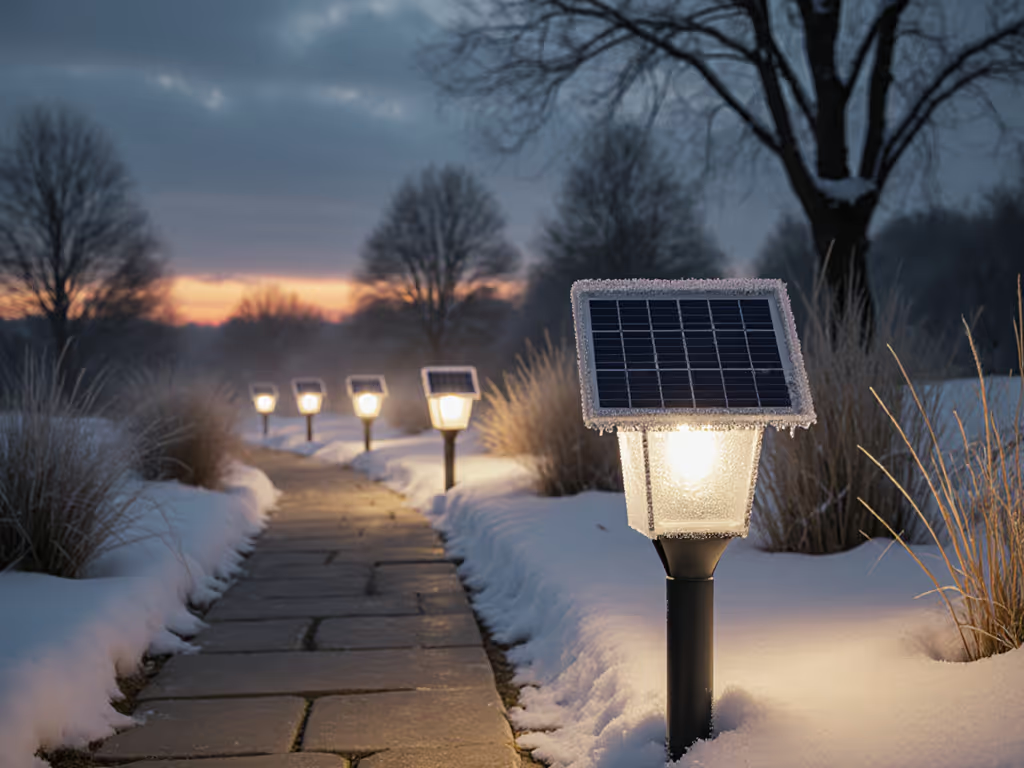
This is why I test in winter. A light that glows bright in September might fail to charge properly in January if the battery chemistry drifts. Lithium-based batteries tolerate cold better than lead-acid, but both suffer. Premium solar lights include thermal management (vents, heat-dissipating enclosures, or phase-change materials) to stabilize internal temperature. Cheap models don't bother, which explains why they fade within two seasons in snowbelt regions.
Expected Lifespan by Battery Type
The numbers vary, but field data clusters around these ranges: For climate-specific pros and cons, see our battery types comparison.
Standard NiMH or NiCd: 2-5 years (typically in budget solar path lights)
Lithium-ion (Li-ion): 3-5 years in high-duty applications; longer if cycling is shallow
Lithium Iron Phosphate (LiFePO₄): 10-15 years, sometimes beyond, with proper DoD and temperature management
Lead-acid batteries, the cheapest option, last 3-7 years in solar setups, but only if you limit discharge to 50% and keep them cool. Given the replacement hassle, they're rarely worth the upfront savings.
Real-world solar systems using premium LiFePO₄ batteries in controlled conditions have logged lifespan estimates of 9.5 to 10+ years under everyday cycling. But that assumes moderate use and stable climate. In harsh or extreme temperatures, expect 20-30% shorter life.
What Kills a Solar Light Battery Prematurely
Beyond temperature and excessive DoD, several habits and design flaws accelerate failure:
- Overcharging: A broken charging controller that keeps the battery at 100% continuously will degrade it fast.
- Deep discharge cycles: Draining below 20% capacity regularly stresses the chemistry.
- Poor water sealing: Moisture intrusion corrodes internal circuitry and accelerates chemical breakdown.
- No shade tolerance: Lights that can't recharge on cloudy days attempt extreme DoD just to stay alive.
- Cheap or undersized panels: Inadequate solar input forces deeper daily discharge. Use our solar panel size guide to right-size panel-to-battery ratios for reliable year-round charging.
Charge Cycle Management: Practical Optimization
If you want your solar lights to survive 10+ seasons, here's what matters:
- Choose the right battery chemistry: Prioritize LiFePO₄ or high-grade Li-ion over NiMH or lead-acid. The upfront cost difference is $15-30 per light; the replacement cycle savings are enormous.
- Match panel size to battery and duty cycle: A light that runs 8 hours nightly needs enough panel wattage to recharge fully, plus buffer for cloudy days. Undersized panels force shallow-depth desperation.
- Verify the charging controller's DoD limits: Quality fixtures cap charge at 80% and never drain below 20%. This isn't glamorous (it's invisible), but it's the difference between a three-year burnout and a ten-year keeper.
- Protect from temperature extremes: Site lights away from heat-retaining surfaces (dark pavement, south-facing walls) in summer. In winter, ensure adequate drainage around fixtures so water doesn't pool and freeze, cracking the housing.
- Test shade tolerance before committing: Log the light's output after two or three consecutive gray days. If it dies or dims drastically, the battery-to-load ratio is too aggressive for your climate or site. Use our solar light testing guide to evaluate runtime, brightness, and recovery after cloudy periods.
FAQ: Common Charge Cycle Questions
Q: If I cover the solar panel in winter, do fewer charge cycles extend life?
A: Paradoxically, no, if fewer cycles means deeper discharge. A battery cycled to 90% DoD five times fails faster than one cycled to 40% DoD ten times. Shallow, frequent cycles are gentler than rare, deep ones. Instead, relocate lights to sunnier spots in winter or accept dimmer output.
Q: Can I extend battery life by turning the light off manually?
A: Yes, if your fixture has a manual switch. Zero discharge means zero wear. But most solar lights lack controls, and the energy saved is negligible, a 0.5-watt LED drawing 6 hours nightly adds minimal stress compared to the heat and charge-cycle patterns.
Q: Do different battery brands within the same chemistry have wildly different cycle life?
A: Yes. A premium LiFePO₄ cell from an established manufacturer might exceed rated cycle life by 20-30%, while a cheap knockoff might fail 50% earlier. This is why transparent spec sheets and warranty terms matter more than brand recognition.
The Bottom Line: Real-World Durability
A solar light that costs $35 with a generic NiMH battery will need replacing in 2-3 seasons. A $70-100 fixture with LiFePO₄, proper thermal design, and conservative DoD limits will still function a decade later, saving you money, frustration, and waste. Cycle life is the invisible backbone of that promise.
Measurement and transparency beat marketing every time. Check the battery type, confirm the IP rating for water sealing, and ask the seller for real-world lifespan estimates, not just cycle counts. If they can't or won't explain the trade-offs, the light probably won't explain itself either when it dies in December.
Related Articles