Solar Driveway Lighting: Durability Requirements for Vehicles
By Hana Takahashi • 24th Oct
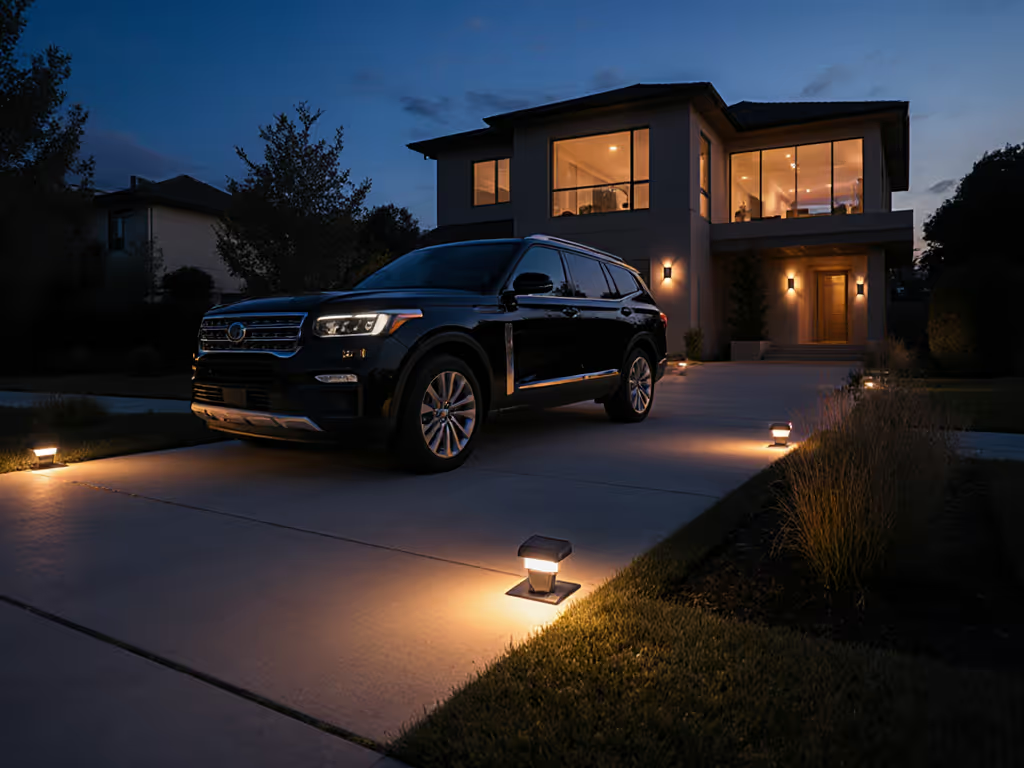
Solar driveway lighting must balance illumination with resilience when exposed to vehicle traffic. Effective systems require impact-resistant materials, weatherproof enclosures, and robust mounting to withstand physical stresses from vehicles, debris, or environmental factors. Vehicle-safe designs prioritize low-profile fixtures, glare reduction, and structural integrity to prevent hazards while maintaining reliable operation across seasons. Let's explore these durability requirements in detail.
Vehicle-Specific Durability Demands
Driveway lighting faces unique stressors: tire pressure, vibration, incidental impacts, and environmental exposure. Three non-negotiable requirements emerge:
- Impact Resistance: Fixtures must withstand minor collisions (e.g., reversing vehicles, falling branches). Polycarbonate lenses and reinforced aluminum housings (like those in commercial-grade solar flood lights) absorb shocks while preventing cracks.
- Weight Tolerance: Embedded fixtures require compression ratings exceeding 1,000 pounds to resist deformation under tires. Bollard-style lights often incorporate steel-reinforced bases for this purpose.
- Vibration Resilience: Continuous vehicle movement demands anti-loosening hardware and flexible joints to maintain electrical connections.
Environmental Hardening
Extreme weather accelerates failure without proper engineering:
| Threat       | Solution                   | Performance Metric |
|--------------|----------------------------|--------------------|
| Freeze-Thaw  | Gel batteries & sealed junctions | -20°C to 60°C      |
| Water Ingress| IP65+ enclosures           | Submersion-proven  |
| UV Degradation | UV-stabilized polycarbonate | 10+ year lifespan  |
| Salt/Corrosion | Powder-coated aluminum bodies | Coastal-resilient  |
Lithium batteries outperform lead-acid in cold climates, maintaining charge efficiency below freezing. In regions with heavy snowfall, heated solar panels (like those in DOT-approved systems) prevent accumulation that blocks charging.
Safety Integration
Vehicle operations demand glare-free illumination. For spec clarity on lumens, color temperature, beam angles, and IP ratings, see our glare-free solar lighting guide. Dark-sky compliant fixtures feature:
- Full Cutoff Shielding: Prevents light trespass into drivers' sightlines
- Warm Spectrums (≤3000K): Reduces insect attraction while improving visibility
- Motion-Sensing Modes: Activates bright illumination only during vehicle approach, conserving energy
Studies show cool-white (>4000K) path lighting attracts 48% more insects than warm alternatives, creating unnecessary hazards near vehicles.
Installation and Maintenance Protocols
Secure mounting prevents displacement:
- Embedded Bases: Require concrete footings below frost lines
- Surface-Mounts: Need triple-threaded anchors for asphalt
- Tilt-Adjustable Panels: Maintain optimal charging angles despite ground settling
Routine maintenance includes quarterly lens cleaning and biennial battery checks. For a season-by-season checklist, follow our solar light maintenance guide. Systems with modular components (like replaceable battery trays) extend service life beyond 7 years. Timers are a kindness, both to nocturnal wildlife and to maintenance schedules, automating operation while reducing wear.
Compliance and Verification
Engineers validate durability through:
- MIL-STD-810G Testing: Vibration/temperature certification
- IK08+ Ratings: Confirming impact resistance
- LM-80 Reports: LED lifespan verification under stress
Prioritize products displaying IP (Ingress Protection) and IK (Impact Protection) ratings rather than vague marketing terms.
Related Articles