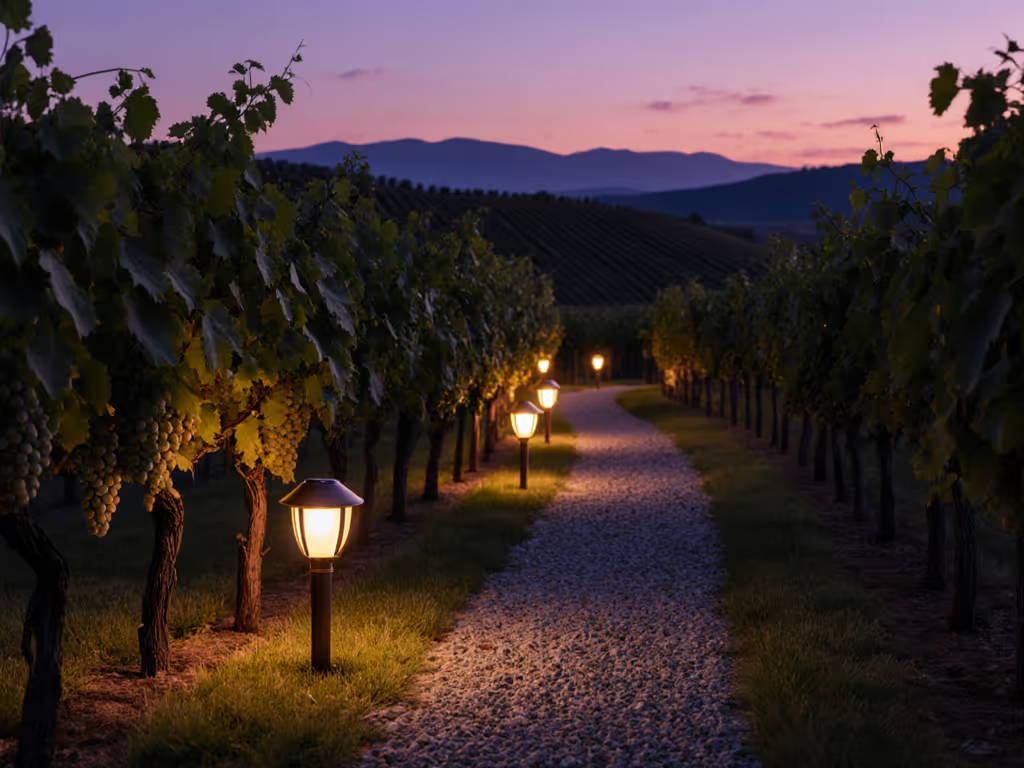
Architectural Feature Solar Lights: Buying Guide
By Rohan Patel • 28th Apr
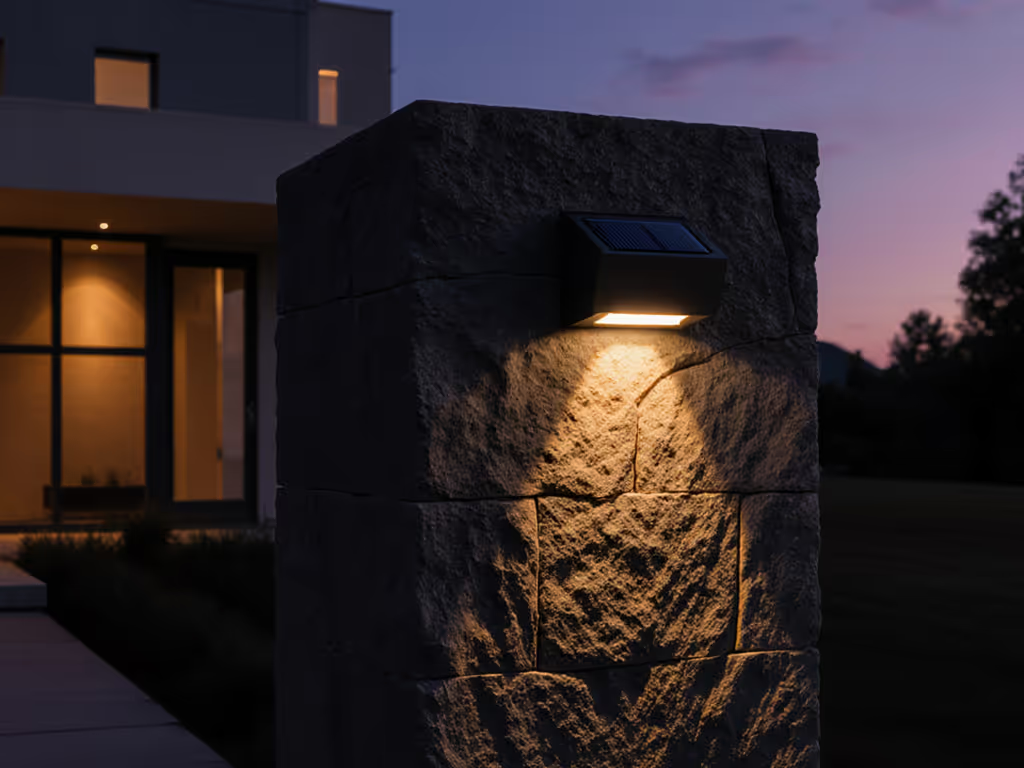
When you're sourcing architectural feature solar lighting for stone walls, accent plantings, or structural elements, manufacturer spec sheets will tell you one story. Field logs (temperature, lux measurements, battery voltage after consecutive cloudy days, and beam photos) tell another. This guide cuts past the marketing and addresses what actually survives shade, winter, and the real conditions of suburban and rural yards where these fixtures live.
What Counts as Architectural Feature Solar Lighting?
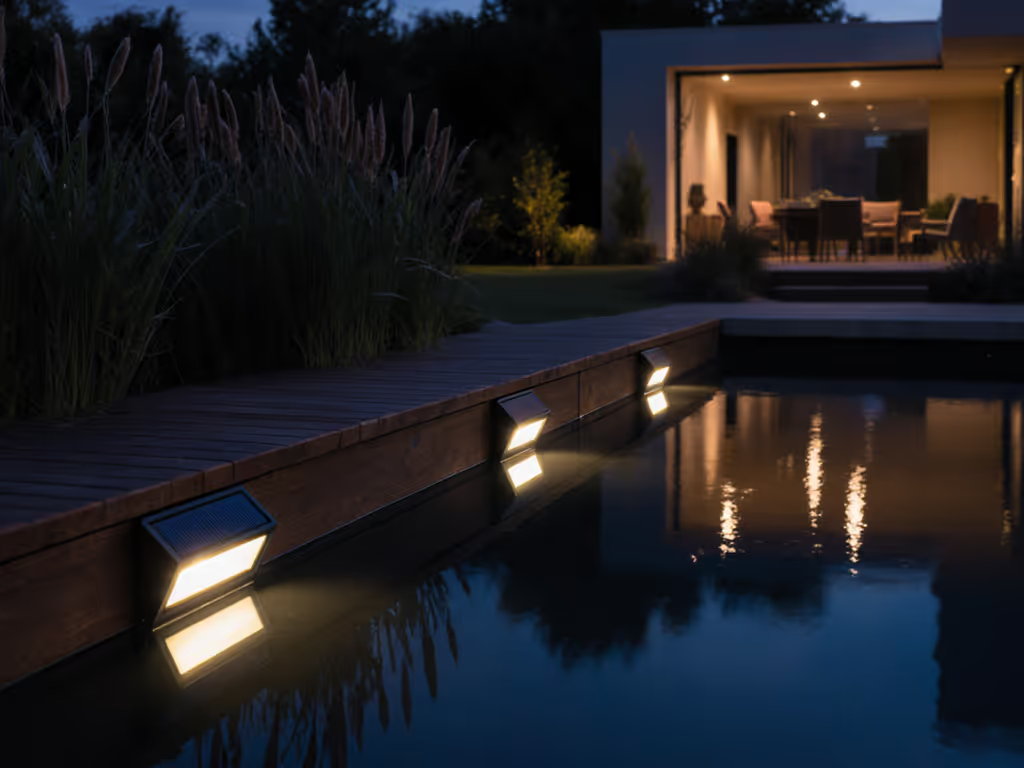
Structural element illumination sits at the intersection of function and design. Unlike basic path stakes, these lights are purpose-built to highlight masonry, uplift sculptural accents, or silhouette landscape features. They're often installed in fixed positions (rather than scattered across beds) and demand consistency: matched beam angles, uniform color temperature, and output that doesn't fade after a few rainy days.
Architectural fixtures typically range from 50 to 400 lumens, deliver warmer CCTs (2700-3000K), and use either spike mounts, wall brackets, or in-ground casings. The critical difference: they're judged not just on brightness, but on how that brightness shapes the space. A 200-lumen downspill with tight beam control beats a diffuse 400-lumen scatter when you're highlighting a textured stone wall. The beam matters more than the bulb.
FAQ: Real-World Selection & Performance
Why Do Most Solar Garden Lights Fail in Shade or Winter?
Three compounding factors:
-
Weak PV cells under overcast skies. Standard polycrystalline panels (~15% efficiency) undercharge lithium or NiMH batteries on gray days. Stack three consecutive cloudy days, and many fixtures output 30-50% of rated brightness by day four.
-
Cold-sensitive batteries. Lithium ions lose capacity in freezing temperatures; a 3.7V cell rated at -10°C will see voltage sag at -5°C or colder, cutting LED runtime by 20-40% in snowbelt climates.
-
Mismatched battery chemistry to panel wattage. I've logged fixtures with 0.5W solar panels paired to 2000mAh batteries. In 4 hours of diffuse winter sun, they charge to 60% capacity, fine for a 2-hour runtime, and disastrous for all-night operation.
Three sunless days is my benchmark. That weekend I mentioned leaving five lights in a shaded corner? Two survived. One was a 3000K accent light with a 1W panel, 2600mAh LiFePO₄ cell, and a tight 120° beam. The other was an older monocrystalline unit with a sealed lead-acid reservoir. Both logged usable (>20 lux) output after 72 hours without sun. The others dropped below 5 lux (unusable for accent lighting) by day two.
What's the Difference Between Manufacturer Lumens and Real-World Output?
Manufacturer ratings assume:
- Fresh battery (100% charge)
- 25°C ambient temperature
- Measurement taken at LED maximum brightness (often a brief 30-second flush before dimming)
Real-world conditions:
- Battery at 70–80% capacity after 2–3 weeks of use
- Temperature 5-15°C in spring/fall, sub-zero in winter
- Dimming algorithm kicking in after 2 hours to extend runtime
A fixture rated "200 lumens" often delivers 120-140 lumens at user-level brightness on a typical evening, especially if it's been installed in partial shade. When comparing products, ask for continuous output at 80% battery state and post-dimming brightness if the unit has a decay curve. For a deeper explanation of specs like lumens, CCT, and beam angles, see our glare-free lighting guide.
How Do Stone Wall Uplighting and Sculptural Garden Accents Differ in Lighting Needs?
Stone wall uplighting requires controlled beam spread and directional focus:
- Typical pitch: 20-45° upward tilt
- Beam angle: 60-120° (tight) to avoid sky glow and neighbor impact
- Color rendering: high CRI (>= 80) to show stone texture; warmer CCT (2700K) reduces harshness
- Wattage: 100-300 lumens sufficient for 6–12 ft walls
Sculptural garden accents (raised planters, statuary, specimen plantings):
- More flexible mounting (stake, ground-level well, or adjustable bracket)
- Beam angle: 90-180° (wider) to create silhouette or side-light effect
- Output: 50-150 lumens, since proximity to viewer is closer
- Dimming preference: some prefer gentle decay over the evening to suggest fading daylight
The common mistake: using a single light type for both. Path-optimized fixtures (wide, diffuse beams; high lumens) wash out accent work. Accent fixtures (narrow, warm, lower output) leave paths ambiguous. For placement tips tailored to pathways and architectural features, read our optimal garden lighting layout.
What Should I Look for in Battery Chemistry and Capacity?
Three mainstream battery types:
Lithium Iron Phosphate (LiFePO₄):
- Voltage: 3.2V nominal (less drop under cold stress than lithium-ion)
- Cycle life: 2000-3000 full cycles (~5-7 years in solar duty)
- Cold performance: Usable to -20°C, modest voltage sag
- Cost: 30-50% premium over NiMH
- Best for: Variable-weather climates; fixtures left on year-round
NiMH (Nickel-Metal Hydride):
- Voltage: 1.2V per cell (most units use 4-8 cells in series, ~4.8-9.6V)
- Cycle life: 500-1000 full cycles (~2-3 years)
- Cold performance: Voltage drops sharply below 0°C; runtime can halve in freezing conditions
- Cost: Baseline
- Best for: Mild climates; seasonal use (installed spring through fall)
Lead-Acid (sealed):
- Voltage: 6V or 12V nominal
- Cycle life: 300-500 cycles (~1-2 years)
- Cold performance: Surprisingly resilient; lead-acid actually improves output at low temperatures
- Cost: Low per unit; frequent replacements offset savings
- Best for: Premium accent fixtures where reliability and cost of frequent service is budgeted
Capacity rule of thumb: For a fixture aimed at 8-10 hours of all-night runtime in winter, pair a 1W solar panel with at least 2000mAh capacity. Halve that expectation if the site is consistently shaded or if you live above 45° latitude.
What IP Rating Do I Actually Need?
IP ratings (Ingress Protection) describe dust and water resistance:
- IP44: Splash-resistant; adequate for most above-ground accent work
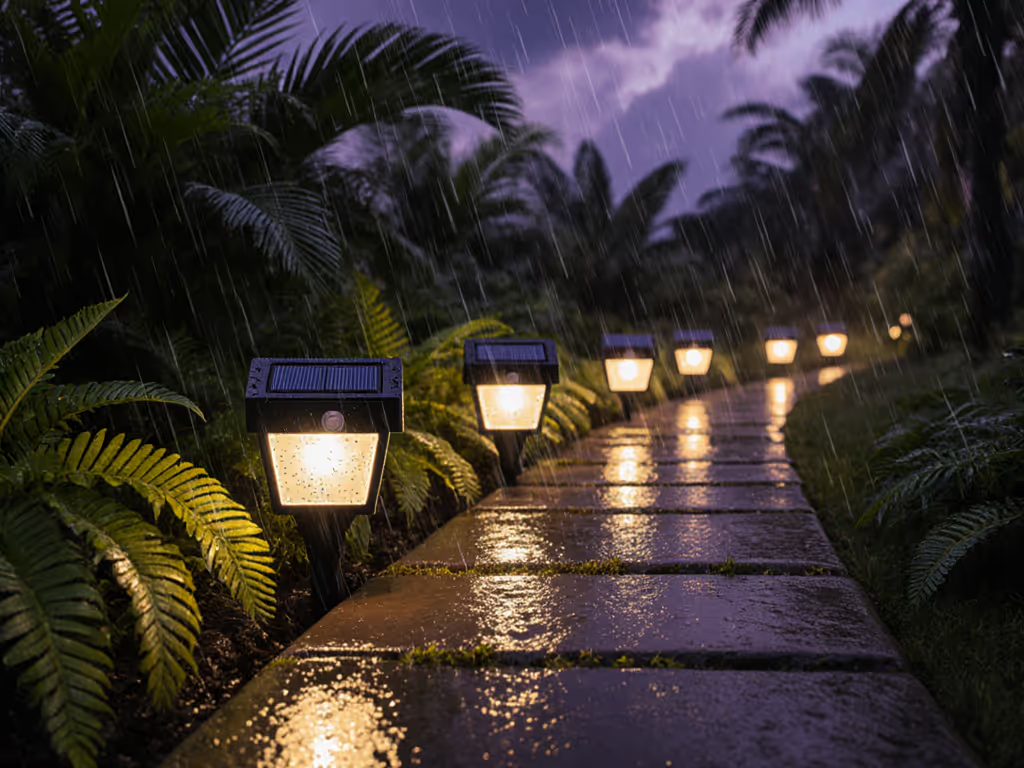
- IP65: Full water-jet proof; required for ground-level or in-pond installations
- IP67: Submersible to 1 meter; overkill for landscape accents but irrelevant upcharge if available
What matters more than the rating: sealing quality. I've seen IP65-rated fixtures fail after a single freeze-thaw cycle because the case was molded with gaps between the lens and housing. When examining products, look for:
- Gasket material (silicone > rubber; check for brittleness in photos)
- Threaded (not snap) lens access for reliable re-sealing
- Conformal coating on circuit boards (visible as a thin clear layer) to resist corrosion
- Stainless or nickel-plated hardware (not zinc-plated, which oxidizes)
How Do I Avoid Light Trespass and Glare Issues?
Architectural lighting's biggest liability is poor beam control. A 300-lumen fixture with a 180° flood beam spills light across neighboring yards and into the night sky. A 200-lumen fixture with a 60° focused beam creates drama without nuisance.
Beam-shaping strategies:
- Tight beam optics (parabolic or stepped reflectors): 30-90° spread, minimal sky glow, precise accent effect
- Mounting height and angle: Lower mounted (ground-level or 12-18" above grade) = less sky spill; steeper tilt (~60° upward for uplighting) concentrates light on target surface
- Color temperature: 2700K (warm amber) reads as lower brightness than 4000K (cool) at equal lumens, a subtle but effective perception shift
- Shields or louvers: Barn-door or baffle accessories can be retrofitted to many fixtures; cut horizontal spill without sacrificing upward accent
HOA and dark-sky regulations increasingly restrict:
- Maximum 3000K CCT for residential zones
- Fixtures with less than 90% light directed downward or onto target (sky-glow limit)
- Lumen caps (often 150 lm for accent, 250 lm for paths)
Before buying, check your local ordinances or HOA covenants. A fixture that's perfect in one neighborhood may be non-compliant 20 miles away. To stay compliant and minimize skyglow, compare Dark Sky certified solar fixtures.
What About Texture-Enhancing Solar Lights and Beam Angle?
Texture (stone mortar, bark patterns, leaf structure) thrives on grazing light. A flat perpendicular beam washes texture; a low-angle, tight-beam source (grazing at 30-60° to the surface) casts shadow relief and reveals detail.
For stone wall uplighting:
Mounting position: 12-24" from base of wall, 6-12" outward
Beam angle: 40-70° (narrow), 2700-3000K
Height: Up to 12 ft of wall coverage with a single 120-200 lumen fixture
Dimming: Subtle fade over 3-4 hours (optional, but enhances mood as evening deepens)
For sculptural accents (specimen plants, statuary):
Mounting position: 2-4 ft away, often at 45° angle to create silhouette or cross-light effect
Beam angle: 60-120° (flexible, depending on feature size)
Output: 80-150 lumens; more = loss of shadow and 3D definition
I've field-logged this. Three identical 180-lumen fixtures aimed at a honey locust specimen tree:
- One with a 120° flood: Bright, flat, washed-out foliage color, visible to neighbors three yards over
- One with a 60° medium beam: Clear branch structure, warm amber glow, noticeable but not intrusive
- One with a 40° narrow beam: Dramatic silhouette, neighbor-imperceptible (CCT 2700K), beam visible only on the tree, not sky
The narrow-beam, warm-CCT version was the smallest in perceived brightness, yet the most dramatic and respectful of surroundings. That's texture-enhancing design.
What Maintenance and Longevity Should I Expect?
A quality architectural solar fixture should demand minimal upkeep:
Year 1-2:
- Panel cleaning: 2-3x per year (spring leaf debris, winter dust; wipe with soft cloth, no solvents)
- Battery: No user service; replace only if output drops >50% and dimmer/season not the cause
- Lens: Check for condensation inside (seal failure); external fogging is cosmetic and clears when humid
Year 3-5:
- Battery replacement: Expected if still in daily use; LiFePO₄ cells ~$15-30 per fixture, often user-swappable
- Gasket refresh: If unit is IP67-rated and you disassemble the lens, use new silicone gasket tape; old rubber shrinks
- Optics: May yellow slightly; reduces brightness ~5-10%; not critical but cosmetically noticeable
Beyond year 5:
- Most fixtures' LEDs remain functional (rated for 30,000-50,000 hours; in solar duty, that's 15-25 years), but housing fatigue (seal creep, housing stress fractures from freeze-thaw) often ends life first
- Recycling: Lithium batteries must be disposed responsibly; many retailers take old fixtures for recycling
Longevity benchmarks for architectural fixtures:
- Budget tier (NiMH, plastic housing, standard IP44): 2-4 years before noticeable decline
- Mid-tier (LiFePO₄, aluminum housing, IP65): 5-8 years of reliable output
- Premium tier (LiFePO₄, powder-coated aluminum, IP67, conformal coating, high-CRI LED): 8-12 years; often outlived by changing design taste, not function
How Do I Select Lights for Shaded or Partial-Shade Sites?
This is where field testing diverges from wishful thinking. Most standard solar accents fail in shade because the panel receives < 4 peak sun hours per day. Three mitigation strategies:
1. Higher-Efficiency Solar Panels:
- Monocrystalline cells: 18-22% efficiency vs. polycrystalline 15-17%
- Visible difference: Premium (often glossy black) vs. standard (mottled blue)
- Output gain: ~20% more charging in same light conditions
- Cost: ~$30-50 premium per fixture
2. Remote or Tilted Panels:
- Many premium fixtures offer detachable solar heads on 10-15 ft cables
- Mount panel on a sunny roof or tree branch; light fixture stays in accent location
- Game-changer for deep shade scenarios
- Caveat: Adds installation complexity and cable management burden
3. Larger Battery Capacity:
- Instead of 2000mAh, spec 3000-4000mAh
- Trades peak brightness for longer runtime; dims sooner but lasts longer
- Effective if you're willing to accept 60-70% output by 10 PM
- Returns diminish after 4000mAh; physical size and weight become impractical
Test verdict: For full-shade sites (< 2 peak sun hours), remote-panel systems outperform any single in-ground fixture. For partial shade (2-4 peak sun hours), monocrystalline + 2600mAh LiFePO₄ is the practical threshold. Below that threshold, expect winter runtime to drop to 4-5 hours on average. For panel tech differences that affect shade performance, see our mono vs poly panel comparison.
Summary and Final Verdict
Architectural feature solar lighting succeeds when real-world durability and honest specs replace promotional brightness claims. Here are your non-negotiables:
-
Battery Chemistry: Choose LiFePO₄ for year-round reliability, especially in variable-weather regions. NiMH is acceptable only for seasonal spring-through-fall use in mild climates.
-
Panel & Capacity Pairing: Minimum 0.8-1W solar panel with 2000mAh capacity for 8+ hour winter runtime. If your site is shaded or north-facing, demand monocrystalline cells or a remote panel option.
-
Beam Control: Narrow beams (60° or tighter), warm CCT (2700-3000K), and fixture position matter more than raw lumens. A 150-lumen grazing accent light beats a 300-lumen wash.
-
Sealing & Materials: Look for conformal board coatings, silicone gaskets, stainless hardware, and threaded lens access. IP65 minimum; IP67 if ground-level or freeze-thaw prone.
-
Specs to Request: Continuous output at 80% battery state, post-dimming brightness, cold-temperature voltage drop (or runtime at 0°C and -10°C), cycle-life rating, and warranty clarity.
-
Field-Test Before Bulk Purchase: Buy one or two units. Install in your intended site. Log brightness, runtime, and appearance through a 3-4 week cycle including overcast days. No spec sheet beats your own yard.
The landscape lighting industry thrives on replacement sales. Homeowners tired of cheap stakes deserve products that Tested in shade, counted in storms, kept for real winters. Architectural feature solar lighting can deliver that promise, but only if you measure, question, and trust field data more than marketing. Your garden is a living space, not a showroom. Light it accordingly.
Related Articles